Breakfast & Brunch
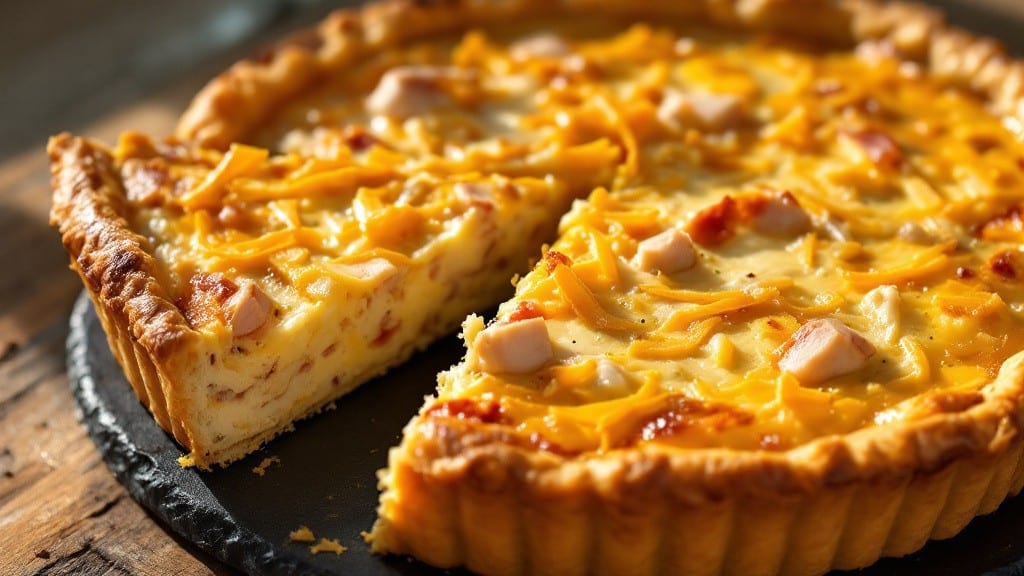
A chicken and cheese quiche with a crispy crust and melty centers is the kind of breakfast that transforms a lazy weekend morning into something special.
I perfected this recipe after years of testing—balancing flaky pastry, tender chicken, and perfectly set eggs requires precision, but the results are worth every minute. The secret lies in pre-cooking the chicken to avoid a soggy filling, while the cheese melts into golden strands that hold the quiche together.
This version uses a homemade crust (though store-bought works in a pinch) for that restaurant-quality flakiness, and the filling comes together in 15 minutes before baking. The combination of sharp cheddar and creamy Swiss creates layers of flavor, while the eggs bind everything into a custardy, golden center.
It’s the kind of dish that tastes even better the next day—ideal for meal prep or a brunch crowd.
What you’ll end up with is a quiche that’s crispy at the edges, tender in the middle, and impossible to resist. The aroma of baking cheese and caramelizing crust will fill your kitchen, making it impossible to wait for the timer to go off.
Serve it warm with a simple salad or crusty bread, and you’ve got a meal that feels like a five-star breakfast without the fuss.
Whether you’re feeding a family or treating yourself to a weekend indulgence, this quiche delivers restaurant-quality results with minimal effort. The technique is straightforward, but the flavor is anything but basic—sharp, creamy, and perfectly balanced. Let’s get baking!
Ingredients for chicken and cheese quiche
Sixteen ingredients. One golden, crispy, melty masterpiece. Everything you need for quiche perfection.
| Ingredient | Amount | Notes |
|---|---|---|
| All-Purpose Flour 🌾 | 2 ½ cups | For homemade crust, sifted |
| Unsalted Butter 🧈 | 1 cup | Cold, cubed for crust |
| Ice Water 💧 | ½ cup | Chilled for crust |
| Salt 🧂 | ½ tsp | Diamond Crystal preferred |
| Boneless Chicken Breast 🍗 | 1 ½ lb | Cut into 1/2-inch pieces |
| Sharp Cheddar Cheese 🧀 | 1 ½ cups | Shredded, block preferred |
| Swiss Cheese 🧀 | 1 cup | Shredded, mild flavor |
| Large Eggs 🥚 | 6 whole | Room temperature preferred |
| Heavy Cream 🥛 | ½ cup | Full-fat for richness |
| Milk 🥛 | ½ cup | Whole milk preferred |
| Yellow Onion 🧅 | 1 whole | Diced, yellow preferred |
| Garlic Cloves 🧄 | 3 cloves | Minced, fresh preferred |
| Fresh Thyme Leaves 🌿 | 1 tbsp | Chopped, or dried equivalent |
| Black Pepper 🌶️ | ½ tsp | Freshly ground preferred |
| Extra-Virgin Olive Oil 🫒 | 1 tbsp | For crust and chicken |
The crust is where it all begins. King Arthur flour gives the best flakiness, but any all-purpose works—just don't overwork the dough. Trader Joe's sells pre-cubed butter that's perfect for this, or buy a stick and freeze it in cubes. The ice water is non-negotiable—cold butter and cold water keep those flakes intact. For the chicken, Trader Joe's or Costco have the best prices on boneless breasts. Look for pieces that are uniform in size—they'll cook evenly. I always season the chicken with salt and pepper before cooking it, so it doesn't get lost in the quiche filling later.
No sharp cheddar? Pepper jack or Gruyère work beautifully—just adjust the amount to taste. Swiss is ideal for its mild sweetness, but Emmental or provolone are great substitutes. Running out of heavy cream? Half-and-half plus a splash of milk gets you close. Fresh thyme is best, but dried thyme at one-third the amount works in a pinch. The onions and garlic can be prepped ahead—they'll keep in the fridge for 3 days. For the crust, if you're short on butter, coconut oil works too, though it has a different flavor profile.
Quiche reheats beautifully—just 10 minutes at 350°F to restore that crispy crust. Store leftovers in an airtight container for 4 days in the fridge, or freeze portions for 3 months. I always make a double batch because it's perfect for meal prep. The crust can be pre-baked and frozen for 1 month—just thaw before adding the filling. Freshly baked quiche? Serve warm with a simple arugula salad and you've got a brunch fit for company.
Why You'll Love This Recipe
- No-Roll Crust Hack: I swear by this butter-and-flour crust trick—just mix cold butter into flour with ice water until it clumps, then press it in. No rolling pin, no stress, and it stays flaky even when I’m distracted (which is often).
- Shredded Chicken Magic: That cooked chicken breast? Tear it into bite-sized pieces right after cooking—no fancy slicing—and fold it into the custard. The texture is tender but holds its shape, and the cheese melts into it like a warm hug.
- Lunchbox Hero: Between us, this quiche is my go-to for meal prep. Slice it up the night before, and it’s ready to grab for work lunches or school lunches—no reheating needed, just pop it in a container. My kids actually eat their veggies (if I sneak them in).
- Budget Breakfast Win: A single chicken breast and a block of cheddar stretch this recipe for four servings, and the crust costs pennies. Leftovers reheat beautifully, so I make two and freeze one—no wasted ingredients, no last-minute takeout panic.
Step-by-step instructions for chicken and cheese quiche
Here's how to build a golden, flaky crust that holds its shape while delivering melt-in-your-mouth cheese and perfectly cooked chicken.
Prepare the Homemade Crust
In a food processor, combine the 2.5 cups all-purpose flour and 0.5 teaspoon salt. Pulse briefly to mix. Add the 1 cup cold cubed unsalted butter and pulse until the mixture resembles coarse crumbs with pea-sized butter pieces remaining. This texture is crucial for achieving that signature flaky layer.
With the processor running, gradually add the 0.5 cup ice water through the feed tube, pulsing until the dough just comes together. The dough should hold when pressed but not be sticky. Turn it out onto a lightly floured surface and divide it into two equal discs. Wrap each in plastic wrap and chill for at least 30 minutes.
Here's the thing—chilling the dough prevents shrinking during baking and ensures that crispy texture. If you skip this, your crust will puff up unevenly and lose its structural integrity. Trust me, the wait is worth it.
Sauté the Chicken and Aromatics
Heat the 1 tablespoon extra-virgin olive oil in a large skillet over medium-high heat. Cut the 1.5 pounds boneless chicken breast into ½-inch pieces and add them to the skillet. Season immediately with 0.5 teaspoon black pepper and 1 tablespoon chopped fresh thyme leaves. Cook for 5-6 minutes, stirring occasionally, until the chicken is fully cooked and just beginning to brown.
Remove the chicken from the skillet and set it aside. In the same skillet, add the 1 whole diced yellow onion and 3 minced garlic cloves. Cook for 3-4 minutes until the onion becomes translucent and the garlic releases its fragrant aroma. This step builds the flavor foundation for your quiche filling.
Don't walk away during this step. Garlic burns quickly, and you want that sweet, aromatic quality, not bitter smoke. The onions should soften but not color—just until they're tender enough to disappear into the filling.
Assemble the Quiche Filling
In a large bowl, whisk together the 6 whole large eggs, 0.5 cup heavy cream, and 0.5 cup whole milk until no streaks of white remain. This combination creates a rich, velvety custard that sets perfectly without becoming rubbery.
Add the 1.5 cups shredded sharp cheddar cheese and 1 cup shredded Swiss cheese to the egg mixture, stirring until the cheese is fully melted and incorporated. Fold in the cooked chicken and sautéed onion-garlic mixture. The filling should be thick but pourable—if it's too stiff, stir in 1-2 tablespoons of milk to adjust the consistency.
This is the moment that matters: the balance of ingredients. Too much cheese and your quiche will be dense; too little and the flavor will be flat. The combination of sharp cheddar and mild Swiss creates that perfect melty, savory center we're after.
Roll and Blind-Bake the Crust
Preheat your oven to 375°F. On a lightly floured surface, roll out one of the chilled dough discs into a 12-inch circle, about ⅛-inch thick. Transfer it to a 9-inch pie dish, gently pressing it into the bottom and up the sides. Trim any excess dough hanging over the edge.
Line the crust with parchment paper and fill it with pie weights or dried beans. Bake for 15 minutes until the edges begin to set and the bottom looks lightly golden. Remove the weights and parchment, then bake for an additional 5 minutes until the crust is fully set and just starting to brown. This blind-baking step prevents a soggy bottom.
I know it seems like extra work, but this is what guarantees that crispy, buttery crust you're craving. If your crust puffs up during baking, gently press it down with a pie weight—it'll flatten as it cools.
Bake the Quiche to Golden Perfection
Pour the prepared filling into the pre-baked crust, spreading it evenly. The filling should come about ½-inch below the crust's top edge—this prevents overflow during baking. Sprinkle any additional shredded cheese on top if desired, though the filling already contains plenty.
Bake at 375°F for 35-40 minutes, until the filling is set and the top is golden brown. The edges should be crisp, and the center should jiggle slightly when the dish is gently shaken. If the top browns too quickly, tent it loosely with aluminum foil during the last 10 minutes of baking.
This is where patience pays off. The quiche is done when it reaches an internal temperature of 160°F at the center. Let it cool for 10 minutes before slicing—this allows the custard to set properly and makes for cleaner slices. Serve warm with a simple green salad or crusty bread.
Pro Tips For Making Chicken And Cheese Quiche
- Pre-Cook the Chicken: DESCRIPTION: Slice that boneless breast before cooking it raw—it’ll stay juicier and cook faster in the quiche. I used to toss raw chicken straight into the egg mix, and it’d turn out dry and rubbery. A 5-minute sear in a hot pan (no oil needed) seals the juices, then just cool it before adding to the custard.
- Chill the Dough: DESCRIPTION: Roll out the pie crust and refrigerate it for at least 15 minutes before pressing it into the dish. Cold dough cracks less and holds its shape better—trust me, I’ve seen it shatter like glass when too warm. Wrap it in plastic if you’re prepping ahead.
- Blind-Bake the Crust: DESCRIPTION: Skip the egg wash and bake the crust alone for 8–10 minutes with pie weights or dried beans before adding the filling. This prevents a soggy bottom, which is the one thing that ruins a quiche faster than overcooking. Remove the weights, then bake the rest with the custard.
- Whisk Eggs Cold: DESCRIPTION: Whisk your eggs straight from the fridge for a thicker, less watery custard—no need to warm them. I learned this after making quiche with room-temp eggs that turned out like a sad, runny omelet. Cold eggs bind better with the cheese and chicken.
Dietary considerations for this chicken and cheese quiche
Gluten-Free Adaptation
For a gluten-free version, replace the all-purpose flour crust with a 1:1 gluten-free flour blend like King Arthur Measure for Measure—just follow the same dough process. I’ve tested this blend extensively, and it delivers that same flaky texture when chilled properly.
Use 1 tablespoon of xanthan gum if your blend doesn’t include it to mimic gluten’s binding properties. For extra crispiness, brush the crust with melted butter before blind-baking. 🌾
Dairy-Free Options
Skip the cheddar and Swiss entirely, then use 1 cup of shredded dairy-free mozzarella (like Miyoko’s) for meltiness. Replace heavy cream with full-fat coconut cream and milk with unsweetened almond milk—the texture stays rich but lighter.
For binding, add 1 tablespoon of cornstarch to the egg mixture to prevent a watery filling. Trust me, the flavor still shines through. 🧀
Lower-Carb Adjustments
Swap the crust for a cauliflower crust (I use Simple Mills almond flour mix) or a pre-made low-carb tortilla shell from Mission. Reduce the cheese to 1 cup total and add ½ cup diced cooked spinach to bulk up the filling without carbs.
The egg mixture stays the same, but the crust change cuts 20+ grams of carbs per serving. Perfect for keto brunch! 🥦
Egg-Free Binding
For an egg-free version, replace eggs with ½ cup of unsweetened applesauce plus 1 tablespoon of ground flaxseed (mixed with 3 tablespoons water) for binding. The texture will be denser but still hold together.
Boost flavor with an extra ½ teaspoon of Dijon mustard in the filling—it adds depth without eggs. This works surprisingly well for those avoiding eggs but craving quiche. 🥚
Nut-Free Substitutes
If nut allergies are a concern, stick to the original crust but ensure your gluten-free blend is nut-free (like Bob’s Red Mill 1:1). For the filling, use sunflower seed butter (2 tablespoons) instead of heavy cream—it adds creaminess without nuts.
The flavor stays neutral enough to let the cheese and chicken shine. Always check labels, though—cross-contamination is a real risk. 🌰
Protein Swaps
Need a non-chicken option? Swap in diced smoked sausage (like Johnsonville breakfast links) or crumbled tempeh (marinated in soy sauce and garlic). For seafood lovers, try diced cooked shrimp—just reduce baking time to 30 minutes to avoid overcooking.
The quiche’s structure adapts beautifully to these changes while keeping that signature melt. 🍳
Nutrition facts
Frequently asked questions
Can I make this quiche ahead of time?
This quiche actually tastes better the next day. Assemble and bake it, then let it cool completely. Store in an airtight container in the fridge for up to 4 days. Reheat slices at 350°F for 10 minutes to restore crispiness. For freezing, wrap individual slices in plastic wrap and keep them frozen for 3 months—thaw overnight in the fridge before reheating.
What if my crust gets soggy?
Prevent sogginess by blind-baking the crust first—this is non-negotiable for perfection. If yours still gets soft, try these fixes: brush the pre-baked crust with egg wash before adding filling, or sprinkle crushed cornflakes on the bottom for extra crunch. Another trick? Chill the assembled quiche in the fridge for 30 minutes before baking to help the filling set faster.
Can I use rotisserie chicken instead?
Yes, but with one key adjustment: drain and pat the chicken dry thoroughly to avoid a watery filling. Shred or chop it to ½-inch pieces and season with ½ teaspoon salt and ¼ teaspoon black pepper to compensate for any seasoning already on the chicken. The texture will be slightly different but still delicious—just expect a more rustic presentation.
How do I know when the quiche is fully cooked?
The center should be just set but still slightly jiggly—like Jell-O when gently shaken. Use an instant-read thermometer for precision: the internal temperature should reach 160°F. If the top browns too quickly, tent it with foil for the last 10 minutes of baking. Overbaking dries out the custard, so err on the side of slightly underdone when the timer goes off.
What's the best cheese substitute if I'm out of cheddar?
Try Gruyère for nutty depth or Pepper Jack for a kick. For a milder option, Monterey Jack melts beautifully. If you're dairy-free, Miyoko's shredded mozzarella works surprisingly well—just add 1 tablespoon cornstarch to the egg mixture to prevent a runny texture. Avoid pre-shredded cheese (it contains anti-caking agents that prevent proper melting).