Breakfast & Brunch
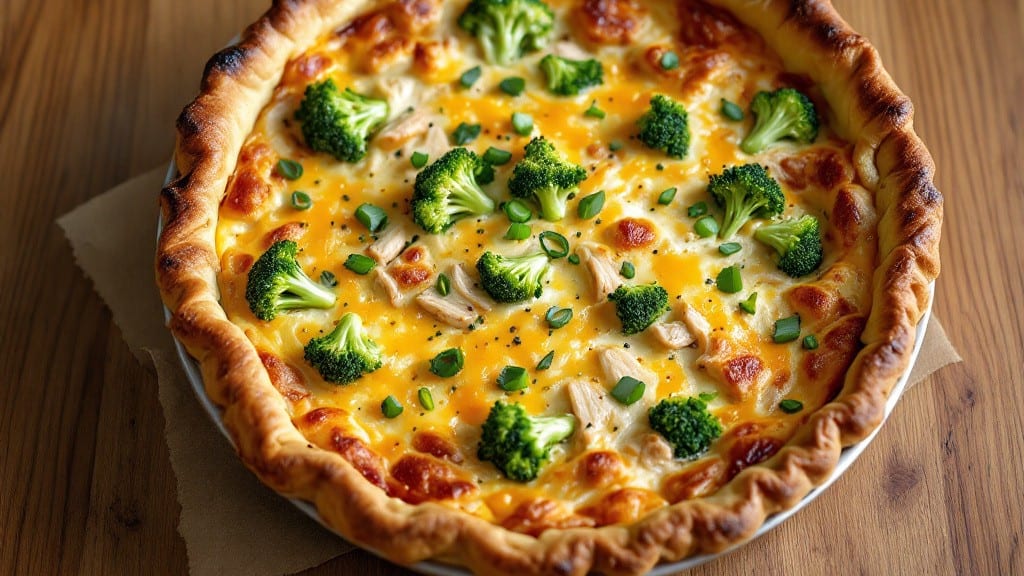
This chicken broccoli cheese quiche recipe delivers the perfect balance of savory chicken, tender broccoli, and melty cheese swirls—all wrapped in a flaky crust that's crisp enough to stand up to every bite.
I developed this version after years of testing quiches for brunch service at my restaurant, where the crust had to be golden and shatteringly thin while holding its shape.
The secret lies in pre-baking the crust just until it's set but still soft enough to yield slightly under the filling's weight.
The filling starts with shredded rotisserie chicken—no cooking required—tossed with steamed broccoli and sharp cheddar cheese for that classic tang. A simple egg mixture binds everything together, creating a custard that's rich but not heavy.
What makes this quiche truly special is the technique of sprinkling extra cheese on top before baking, which creates those signature golden swirls that make every slice look restaurant-worthy.
By the time it emerges from the oven, you'll have a quiche with a flaky crust that's perfectly crisp at the edges and tender underneath, a filling that's creamy yet light, and a top layer of bubbly, melty cheese that pulls into elegant strands.
The aroma alone will have your kitchen smelling like a Parisian café, but the taste proves it's just as satisfying as it is elegant.
Serve this quiche warm from the oven with a simple side salad or crusty bread to soak up every last bit of that golden egg custard. The leftovers reheat beautifully, making it perfect for meal prep when you need a hearty breakfast that doesn't require much effort.
Let's get started on this crowd-pleasing classic.
Ingredients for chicken broccoli cheese quiche
Six ingredients for the crust, seven for the filling—just enough to create restaurant-quality quiche.
| Ingredient | Amount | Notes |
|---|---|---|
| All-Purpose Flour 🌾 | 1 ½ cups | Sifted for flaky crust texture |
| Unsalted Butter 🧈 | 1 cup | Cold, cubed for crust |
| Ice Water 💧 | ¼ cup | For pie crust consistency |
| Salt 🧂 | ½ tsp | Fine sea salt preferred |
| Shredded Rotisserie Chicken 🍗 | 2 cups | Skin removed for lighter filling |
| Fresh Broccoli Florets 🥦 | 3 cups | Steamed until tender-crisp |
| Sharp White Cheddar Cheese 🧀 | 2 cups | Shredded, not pre-shredded |
| Large Eggs 🥚 | 6 whole | Room temperature for custard |
| Heavy Cream 🥛 | ½ cup | Full-fat for richness |
| Milk 🥛 | ¼ cup | Whole milk preferred |
| Garlic Powder 🧄 | ½ tsp | Freshly ground preferred |
| Black Pepper 🌶️ | ½ tsp | Freshly cracked for heat |
| Extra Sharp Cheddar Cheese 🧀 | ½ cup | For golden swirls on top |
The crust is where this quiche earns its flaky reputation. Store-brand butter works fine, but I always splurge on Plugrá or Land O'Lakes unsalted for that perfect melt. Keep everything cold—cold butter, ice water, and chilled flour—to prevent the dough from getting tough. If you're nervous about pie crust, pre-made puff pastry is a lifesaver (just brush with egg wash before filling). For the broccoli, fresh is best—frozen works in a pinch, but thaw and drain it well to avoid a soggy quiche. The cheddar? Sharp white cheddar gives that tangy bite, but Monterey Jack is a great substitute if you prefer milder flavor.
No rotisserie chicken? Cooked chicken thighs shred beautifully, and canned chicken (drained well) works in a pinch. The eggs need to be room temperature—just pop them out of the fridge 30 minutes before mixing. For the garlic powder, fresh minced garlic at half the amount adds serious depth, but don't skip it entirely. The heavy cream and milk combo keeps the custard rich but not too heavy—half-and-half works if you're cutting calories. And that top layer of extra cheese? Don't skimp here—it's what creates those golden swirls everyone loves. If you're worried about overfilling, press the crust edges up slightly before adding the topping.
This quiche reheats beautifully—just 350°F for 15 minutes until the edges are crisp again. Store leftovers covered in the fridge for 4-5 days, or freeze individual slices for up to 3 months. I always make a double batch because it disappears fast—great for meal prep. The crust stays crisp for about 2 hours at room temperature, so serve it warm if possible. For extra flakiness, brush the baked crust with a little melted butter before serving. Trust me, it's worth the extra minute.
Why You'll Love This Recipe
- Rotisserie Rescue: I swear by this trick—tossing in leftover shredded rotisserie chicken means zero extra cooking. The buttery crust and creamy filling just make it taste like you slaved over it (but we won’t tell).
- Crust So Simple: Cold butter, flour, ice water—mix it, press it, done. No rolling pins, no fuss, and honestly? It’s the best crust I’ve ever made that takes less than five minutes.
- Leftovers’ New Best Friend: This quiche actually improves the next day. The cheese gets extra melty, the chicken soaks up all the flavor, and I’ve reheated slices for breakfast, lunch, and even a quick dinner—no one ever complains.
- Cheesy Comfort Every Time: That sharp cheddar and buttery crust combo? It’s the kind of dish that makes you pause mid-bite. Add a sprinkle of garlic powder and you’ve got a flavor punch that feels fancy without the effort.
Step-by-step instructions for chicken broccoli cheese quiche
Here's how to create a golden, flaky quiche with tender chicken and creamy cheese filling.
Prepare the Flaky Crust
In a large bowl, combine the 1.5 cups all-purpose flour and 0.5 teaspoon salt. Cut in the 1 cup unsalted butter using a pastry cutter or your fingers until the mixture resembles coarse crumbs with pea-sized butter pieces. This texture is crucial for that perfect flaky result.
Gradually add the 0.25 cup ice water, one tablespoon at a time, mixing gently with a fork until the dough just comes together. The dough should hold when pressed but not be sticky. Avoid overmixing - you're looking for a clean, smooth surface rather than a smooth dough ball. Divide the dough in half and flatten each piece into a disk. Wrap in plastic and chill for at least 30 minutes while you prepare the filling.
Assemble the Filling
In a large skillet, steam the 3 cups fresh broccoli florets for 3-4 minutes until tender-crisp but still vibrant green. Immediately drain and transfer to a bowl. While still warm, sprinkle with 0.5 teaspoon garlic powder and 0.5 teaspoon black pepper, tossing to coat evenly. The warmth helps the seasonings adhere better.
In a separate bowl, whisk together the 6 whole large eggs, 0.5 cup heavy cream, and 0.25 cup milk until well combined. Add the 2 cups shredded rotisserie chicken and 2 cups sharp white cheddar cheese, mixing until evenly distributed. The cheese should melt slightly from the warm chicken, creating a creamy base for the custard.
Roll and Blind-Bake the Crust
Preheat your oven to 375°F. On a lightly floured surface, roll out one dough disk into a 9-inch circle, about 1/8-inch thick. Transfer to a 9-inch pie dish, gently pressing it into the bottom and up the sides. Trim any excess dough hanging over the edge. Chill the crust for 15 minutes while you prepare the filling.
Line the chilled crust with parchment paper and fill with pie weights or dried beans. Bake for 15 minutes, then remove the weights and bake for another 5 minutes until the edges begin to golden. This pre-baking, called blind-baking, prevents a soggy bottom and ensures your crust stays crisp throughout baking.
Fill and Bake the Quiche
Remove the quiche from the oven and sprinkle the steamed broccoli mixture evenly over the crust. Pour the egg mixture over the broccoli, spreading it evenly with a spatula. The filling should come about 3/4 of the way up the crust's sides, leaving room for the cheese swirls.
Sprinkle the 0.5 cup extra sharp cheddar cheese evenly over the top, then use the tip of a knife to create decorative swirls in the cheese. Return to the oven and bake for 35-40 minutes until the center is just set and the top is golden brown. A toothpick inserted in the center should come out clean with just a few moist crumbs.
Rest and Serve
Allow the quiche to cool for 10-15 minutes before slicing. This resting period lets the filling set properly and makes it easier to cut clean slices. The quiche should have a golden crust with flaky layers, a creamy custard filling, and tender broccoli and chicken throughout.
Serve warm or at room temperature with a simple green salad and crusty bread. The contrast of the flaky crust with the creamy, cheesy filling makes every bite satisfying. Store leftovers in the refrigerator for up to 3 days or freeze for 2 months for quick meals later.
Pro Tips For Making Chicken Broccoli Cheese Quiche
- Preheat That Pan: The crust’s worst enemy is a cold pan. Slide your pie dish into a 375°F oven for 10 minutes before adding the dough—this ensures it crisps evenly and doesn’t turn soggy when the filling steams. (I learned this the hard way after pulling out a quiche with a doughy bottom.)
- Drain and Pat Dry: Rotisserie chicken is salty and wet—two things you don’t want in a quiche. Drain it well, then pat the shredded pieces thoroughly with paper towels. This keeps the crust from getting mushy and balances the seasoning. (Yes, even if you’re impatient like me.)
- Blind-Bake the Crust: Skip the pre-baked crust shortcut—it’s a quiche crime. Line the crust with parchment, fill it with pie weights or dried beans, and blind-bake for 15 minutes before adding filling. This prevents a gummy base and guarantees that golden, flaky edge everyone craves.
- Stir the Filling Cold: Mix your egg-and-cheese filling before adding it to the crust, and keep it in the fridge until ready to pour. A warm filling causes the crust to soften immediately, and you’ll end up with a sad, soggy bottom. (Trust me, your future self will notice the difference.)
Troubleshooting this recipe
Soggy Crust Fix
If your crust turns out soggy, it's usually from steam buildup during baking. I've found the best fix is to blind-bake the crust longer—try 20 minutes total instead of 15, and use a wire rack on the lower oven rack to allow maximum airflow underneath.
For extra insurance, brush the bottom of the crust with egg wash before adding filling. This creates a barrier that prevents moisture absorption. 💧
Undercooked Center
An undercooked center happens when the quiche isn't baked long enough or the oven isn't hot enough. First, check your oven temperature with an oven thermometer—many run 25°F cooler than set.
If the center's still runny after 40 minutes, tent the quiche with foil and bake for 10 more minutes at 350°F. For next time, I recommend using a pie dish with slightly lower sides to help heat penetrate better.
Cheese Not Melty
Cheese that stays clumpy or doesn't melt properly usually means the quiche didn't bake long enough or the cheese was added too late. Always sprinkle the top cheese right before the final baking phase.
For extra meltiness, I like to mix a pinch of cornstarch (about 1/4 teaspoon) into the cheese before topping—it helps create that perfect pull-apart texture. Also, ensure your oven's broiler setting is working properly if you plan to broil briefly at the end. 🧀
Egg Custard Too Watery
A watery custard often means the egg mixture wasn't thick enough or the quiche was underbaked. To fix this, whisk the eggs longer until they're slightly thicker, then let the mixture sit for 10 minutes before pouring into the crust—this helps the eggs thicken naturally.
If it's already in the oven, cover with foil and bake for 5-10 more minutes at 350°F to let the custard set properly without overcooking the top.
Broccoli Too Soft
Over-steamed broccoli turns mushy and releases excess water, making the filling soggy. The key is steaming for exactly 3-4 minutes—no longer! Immediately drain and pat dry with a clean kitchen towel. For extra insurance, toss the broccoli with 1/2 teaspoon cornstarch before adding it to the crust.
This helps absorb any remaining moisture. I also like to squeeze out excess liquid by wrapping the broccoli in a towel and pressing gently. 🥦
Crust Too Tough
A tough crust usually means the butter was too warm or the dough was overworked. For next time, chill the dough longer (up to 1 hour) and handle it as little as possible.
If you're short on time, pre-made puff pastry is a great shortcut—just brush with egg wash and fold the edges up before adding filling.
For a homemade fix, brush the baked crust with melted butter and bake for 2-3 minutes at 400°F to add crispness after the quiche comes out of the oven.
Nutrition facts
Frequently asked questions
Can I make this quiche without a homemade crust?
For a quick version, use pre-made puff pastry—just brush it with egg wash before adding filling. If you prefer pie crust, store-bought versions work too. The key is ensuring your crust is pre-baked (blind-baked) for 15-20 minutes to prevent sogginess.
How do I store and reheat leftovers?
Keep leftovers covered in the fridge for 3-4 days. To reheat, cover with foil and warm at 350°F for 15 minutes until the edges are crisp. For freezing, slice before storing—individual portions reheat best. The crust stays crisp for 2 hours at room temperature.
What's the best way to make this quiche gluten-free?
Replace the all-purpose flour with a 1:1 gluten-free flour blend (like Bob's Red Mill) and use gluten-free pie crust or almond flour crust. For the filling, ensure all cheeses are certified gluten-free. The texture will be slightly different but still delicious!
Can I substitute rotisserie chicken with something else?
Yes! Use cooked chicken thighs (shredded), canned chicken (drained well), or even diced ham for a different flavor. For vegetarian, swap chicken with sautéed mushrooms or spinach. Just ensure your protein is fully cooked and drained to avoid a watery filling.
Why does my quiche filling sometimes look curdled?
Curdling happens when eggs cook too fast or the oven is too hot. Always bake at 375°F and avoid opening the oven door during baking. If it happens, cover with foil and bake 5 more minutes at 350°F to let the eggs set gently.