
Sauces & Condiments
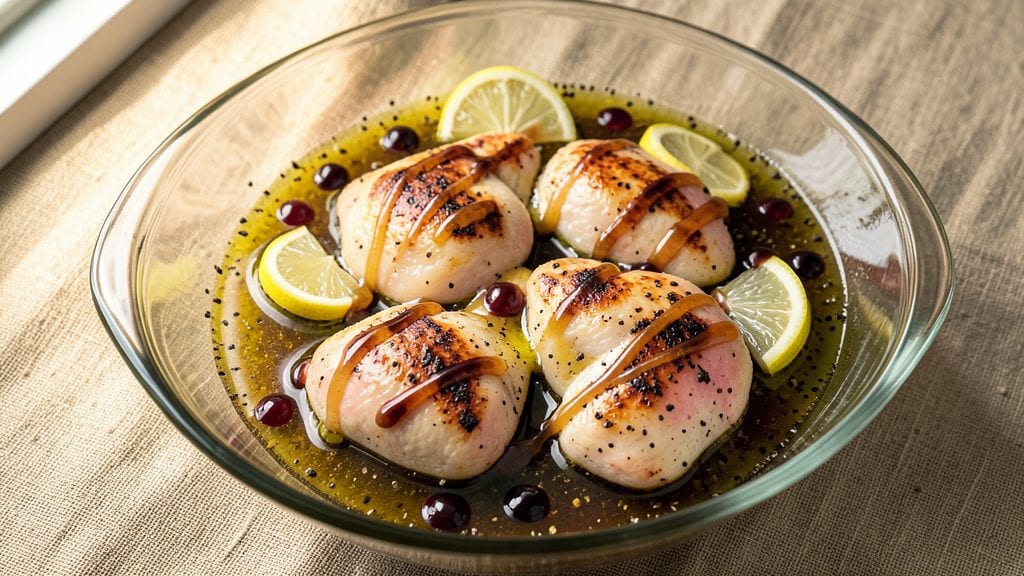
A chicken heart marinade transforms gamey meat into tender, umami-rich bites that rival restaurant-quality dishes. This marinade balances bold flavors with tenderizing acids, breaking down tough fibers while infusing every bite with garlic, citrus, and aromatic herbs.
I developed this blend after years of experimenting with offal—it’s the secret weapon for home cooks who want restaurant-worthy results without the fuss.
The foundation of this marinade is a trio of key elements: acidic brightness from lemon juice and vinegar, rich depth from soy sauce and Worcestershire, and aromatic complexity from garlic, rosemary, and black pepper.
These ingredients work together to tenderize the meat while building layers of flavor that cut through the natural richness of chicken hearts. The marinade also includes olive oil to keep the meat moist and honey to balance acidity with subtle sweetness.
What you’ll achieve is chicken hearts that are tender, flavorful, and perfectly seasoned—ready for grilling, pan-searing, or roasting. The marinade infuses the meat deeply, ensuring every bite delivers a harmonious blend of savory, tangy, and herby notes.
Whether you’re preparing for a special dinner or simply elevating a weeknight meal, this marinade transforms an often-overlooked cut into a standout dish.
Use this marinade for 2 to 24 hours—the longer it sits, the deeper the flavor penetration. Store leftovers in the refrigerator for up to a week, making it a versatile addition to your cooking arsenal.
Let’s get started on creating a marinade that will elevate your offal dishes to new heights.
Ingredients for chicken heart marinade
Eleven ingredients that transform tough chicken hearts into tender, umami bombs.
| Ingredient | Amount | Notes |
|---|---|---|
| Extra-Virgin Olive Oil 🫒 | ½ cup | High-quality, fruity variety preferred |
| Fresh Lemon Juice 🍋 | ¼ cup | Freshly squeezed, no pulp |
| Red Wine Vinegar 🍷 | ¼ cup | Dry, bold variety for tang |
| Soy Sauce 🍶 | ¼ cup | Low-sodium preferred for balance |
| Worcestershire Sauce 🧂 | 2 tbsp | Original, not vegetarian version |
| Honey 🍯 | 2 tbsp | Wildflower or clover preferred |
| Garlic Cloves 🧄 | 8 whole | Freshly minced, not pre-minced |
| Fresh Rosemary 🌿 | ¼ cup | Finely chopped, stems removed |
| Fresh Thyme Leaves 🌿 | ¼ cup | Finely chopped, stems removed |
| Black Peppercorns 🌶️ | 1 tsp | Freshly cracked, not pre-ground |
| Diamond Crystal Kosher Salt 🧂 | 1 ½ tsp | Fine grain preferred |
The olive oil and honey are your moisture and sweetness anchors—look for extra-virgin olive oil with fruity notes (like California Olive Ranch or Colavita) and raw honey for that subtle floral depth. Fresh rosemary and thyme are non-negotiable here; dried won't cut through the gamey flavor like fresh. I grab my herbs from Whole Foods or the farmers' market when they're in season—bright green, no wilting. The garlic should be plump and firm; no sprouts. For the vinegar, Balsamic Glaze isn't the same—stick with classic red wine vinegar. The Worcestershire? Original Lea & Perrins is the gold standard, but any quality brand works.
No fresh rosemary? Dried at half the amount works, but you'll miss that piney aroma. Subbing honey for maple syrup? Use the same amount—it's sweeter, but the flavor profile shifts. Short on lemon juice? Lime juice plus a pinch of sugar mimics the brightness. The soy sauce can be swapped for coconut aminos if you're avoiding gluten, but the umami depth will be slightly different. For the vinegar, apple cider vinegar works in a pinch, but it adds a milder tang. The black peppercorns? Freshly cracked is key—pre-ground loses its punch after a few weeks. Store your peppercorns in a cool, dark place to preserve their potency.
This marinade keeps for up to 1 week in the fridge, sealed in an airtight container. The longer it sits, the deeper the flavor—24 hours is ideal for maximum tenderization. For best results, marinate the chicken hearts in a sealed bag or container, turning occasionally. Leftover marinade? Strain and reduce it on the stove for a quick pan sauce—just simmer for 5-7 minutes until slightly thickened. Freeze portions in ice cube trays for single-use servings, then transfer to a bag for up to 3 months. The honey helps preserve it, so no need for extra preservatives.
Why You'll Love This Recipe
- Here’s what sold me: the bright, zesty kick from lemon and red wine vinegar married with the deep, savory punch of soy and Worcestershire. It’s not just flavor—it’s layers. The olive oil keeps the hearts tender, but the marinade? That’s the star. (Yes, even on a Tuesday night.)
- Five-Ingredient Magic: I swear by this marinade—just oil, lemon, vinegar, soy, and Worcestershire. That’s it. No overcomplicating, no hunting for obscure spices. The acidity cuts through the richness of the chicken hearts while the umami from Worcestershire and soy makes every bite stick.
- Tangy Umami Bomb: Here’s what sold me: the bright, zesty kick from lemon and red wine vinegar married with the deep, savory punch of soy and Worcestershire. It’s not just flavor—it’s layers. The olive oil keeps the hearts tender, but the marinade? That’s the star. (Yes, even on a Tuesday night.)
- Meal Prep MVP: This marinade doubles as a sauce—toss it with roasted hearts, drizzle it over rice, or slather it on grilled skewers. I make a big batch on Sundays, let it work its magic overnight, and suddenly I’ve got three meals covered. No last-minute stress, just effortless flavor.
Step-by-step instructions for chicken heart marinade
This marinade transforms gamey chicken hearts into tender, flavorful bites with balanced depth.
Prepare the Base Ingredients
In a medium bowl, combine the 0.5 cup extra-virgin olive oil with the 0.25 cup fresh lemon juice and 0.25 cup red wine vinegar. The acidity of the lemon and vinegar will help tenderize the meat while the oil carries the flavors deep into the fibers. Stir these ingredients together until fully emulsified—you'll notice the mixture become slightly thickened as the acid and oil marry.
Next, add the 0.25 cup soy sauce and 2 tbsp Worcestershire sauce to the bowl. These umami-rich components are essential for cutting through the natural gameiness of chicken hearts. The soy sauce adds saltiness and depth, while the Worcestershire contributes its complex fermented flavor profile. Stir well to integrate all ingredients completely, ensuring no streaks remain.
Incorporate Sweetness and Aromatics
Drizzle in the 2 tbsp honey while stirring continuously. The honey not only balances the acidity but also adds a subtle sweetness that complements the savory elements. You'll see the mixture become slightly glossy as the honey dissolves into the liquid.
Add the 8 whole garlic cloves, which have been minced just before combining (never use pre-minced garlic—it loses flavor quickly). The garlic will infuse the marinade with its pungent, aromatic qualities. Sprinkle in the 0.25 cup finely chopped fresh rosemary and 0.25 cup fresh thyme leaves, making sure to remove any woody stems beforehand. These herbs will contribute earthy, piney notes that elevate the overall flavor profile.
Season and Emulsify
Crack the 1 tsp black peppercorns using a mortar and pestle or a spice grinder until they're finely ground. Add them to the bowl along with the 1.5 tsp diamond crystal kosher salt. The peppercorns will introduce a sharp, slightly floral heat, while the salt enhances all the other flavors and helps tenderize the meat.
Using a whisk or immersion blender, combine all ingredients until the marinade reaches a smooth, consistent texture. This step ensures even distribution of flavors and creates a cohesive base. Taste the marinade at this stage—it should be tangy, slightly sweet, and deeply savory with a hint of herbal brightness. Adjust the balance of salt or acid if needed, but the recipe is already carefully calibrated for optimal flavor.
Marinate the Chicken Hearts
Place the chicken hearts in a resealable plastic bag or shallow dish. Pour the marinade over them, ensuring each piece is fully coated. For best results, marinate for at least 4 hours at room temperature or overnight in the refrigerator. The acidity in the marinade will begin breaking down the meat fibers, making the hearts more tender and allowing the flavors to penetrate deeply.
If you're short on time, you can marinate for 2 hours at room temperature, but longer is always better. The refrigerator slows down the marinating process, so overnight yields the most dramatic transformation. When ready to cook, remove the chicken hearts from the marinade (reserve the marinade for basting or sauce-making) and pat them dry with paper towels before cooking to ensure a good sear.
Pro Tips For Making Chicken Heart Marinade
- Trim the Fat First: Chicken hearts have a thick layer of connective tissue and fat—slice them open, scrape out the white membrane, and trim any visible fat before marinating. I learned this the hard way when my first batch tasted greasy no matter how long I marinated it.
- Marinate Overnight, Not Hours: Two hours is the bare minimum, but overnight (8-12 hours) lets the red wine vinegar and soy sauce tenderize properly. I used to rush it, and the hearts stayed tough—now I set the marinade the night before, even if it means waking up to a fridge full of lemony-smelling containers.
- Balance the Vinegar: Red wine vinegar is potent—start with 1 tablespoon per cup of marinade, then taste. Too much? Add a splash of olive oil to mellow it out. I once overdid it and ended up with hearts that tasted like a pickle, so now I adjust as I go.
- Use Cold Hearts: Take the hearts straight from the fridge and submerge them in the cold marinade—this keeps them firm and prevents them from absorbing too much liquid at once. I was skeptical until I tried it, and now my hearts stay plump and flavorful, not soggy.
Regional styles of this chicken heart marinade
Southern BBQ Style
The South takes this marinade to the next level by adding 1 tbsp smoked paprika and 1 tsp liquid smoke to the base recipe. This creates a deep, smoky profile that pairs perfectly with grilled chicken hearts.
I like to serve them on toasted brioche buns with sliced pickles and coleslaw—a true Southern-inspired offal sandwich. The key is to marinate for at least 8 hours to let the smoky flavors penetrate fully. 🔥
Italian Herb Version
For an Italian twist, swap the rosemary for fresh oregano and thyme, then add 1 tbsp balsamic vinegar and 1 minced shallot. The acidity of the balsamic enhances the umami, while the oregano adds a bright, slightly bitter herbal note.
I serve these hearts with creamy polenta and a side of roasted cherry tomatoes. The marinade works beautifully with pan-seared chicken hearts, creating a crispy exterior while keeping the inside tender. 🌿
Mexican Citrus Blast
This zesty variation replaces the red wine vinegar with lime juice and adds 1 tbsp adobo sauce, 1 tsp ground cumin, and ½ tsp chili powder. The result is a bright, spicy marinade that’s perfect for grilled or charred chicken hearts.
Serve with warm corn tortillas, avocado slices, and pickled red onions for a fiesta-worthy dish. The longer you marinate (up to 12 hours), the more intense the flavors become. 🌶️
Asian-Inspired Five-Spice
Transform this marinade into an Asian-inspired version by replacing the rosemary with 1 tsp five-spice powder and adding 1 tbsp rice vinegar and 1 tsp grated ginger. The five-spice blend (star anise, cloves, cinnamon, fennel, and pepper) adds a warm, aromatic depth that complements the chicken hearts beautifully.
I love serving these with steamed jasmine rice and a side of quick-pickled cucumbers. The marinade works especially well for stir-fried chicken hearts, where the spices can really shine. ✨
Herb-Forward French Style
For a French-inspired take, increase the fresh herbs to 0.5 cup each of tarragon and parsley (instead of rosemary and thyme) and add 1 tbsp Dijon mustard to the marinade. The mustard adds a subtle tang that pairs wonderfully with the bright herbs.
I recommend searing the chicken hearts in a cast-iron skillet until golden brown and serving them with crusty baguette slices and a red wine reduction sauce. The longer marinating time (up to 24 hours) allows the flavors to meld perfectly. 🍷
Spicy Korean Gochujang Twist
This fiery variation swaps the Worcestershire sauce for 2 tbsp gochujang (Korean chili paste) and adds 1 tbsp soy sauce and 1 tsp sesame oil. The gochujang brings a deep, spicy-sweet heat that cuts through the gameiness of the chicken hearts.
I serve these with steamed white rice and a side of kimchi to balance the flavors. The marinade works best when used for 4-6 hours, as the gochujang’s heat intensifies over time. 💛
Nutrition facts
Frequently asked questions
Can I use this marinade for other offal cuts?
This marinade works beautifully with chicken livers, beef hearts, or even pork liver. The acidity and umami balance cut through gamey flavors in any offal. For beef hearts, marinate for 6-8 hours to tenderize the tougher fibers. Just adjust cooking times—offal cooks faster than regular meat.
How do I store leftover marinade?
Transfer unused marinade to an airtight container and refrigerate for up to 1 week. For longer storage, freeze in ice cube trays (thaw as needed) or small containers for 3 months. The honey helps preserve it naturally. Never refreeze thawed marinade after cooking.
What if I don't have fresh rosemary?
Use ½ cup dried rosemary (not the same potency) or substitute with ½ cup fresh thyme plus ½ tsp dried oregano. For a completely different profile, try 1 tbsp dried marjoram. The key is balancing herbal notes—don't skip fresh herbs entirely if possible.
Can I make this marinade without honey?
Yes! Replace the honey with 1 tbsp maple syrup or 1 tbsp brown sugar dissolved in warm water. Maple syrup adds subtle earthy notes, while sugar creates a sharper contrast to the acidity. For a sugar-free version, use 1 tbsp balsamic glaze instead.
Why do my chicken hearts still taste gamey after marinating?
Gamey flavor often means the marinade time was too short or the meat wasn't properly coated. Marinate for at least 8 hours (overnight is ideal) and ensure every piece is submerged. For extra tenderization, add ½ cup buttermilk to the marinade before using. The acidity in buttermilk breaks down fibers faster.