
Soups & Stews
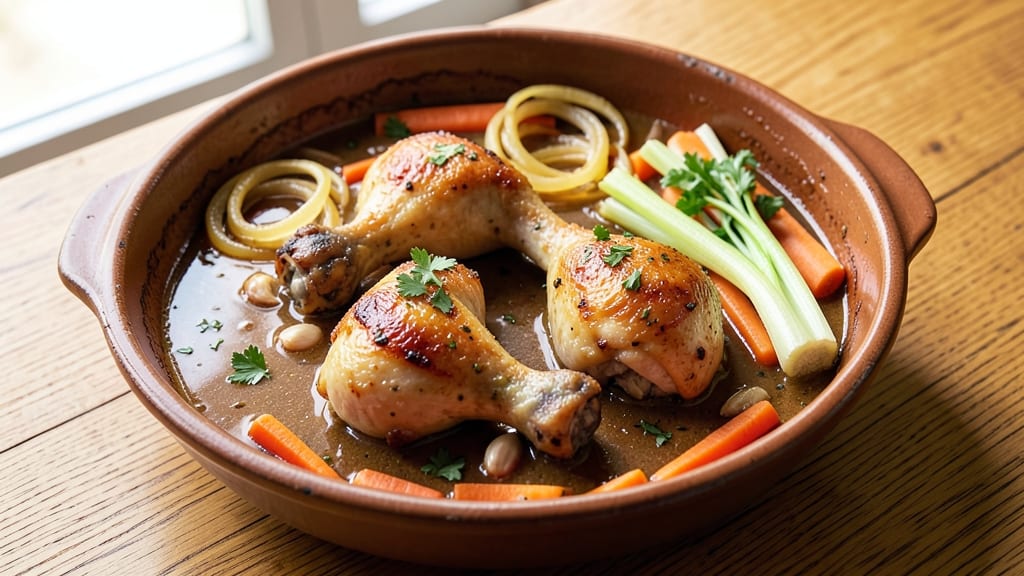
This stewed chicken legs recipe transforms tough, flavorful thighs into melt-in-your-mouth perfection through a two-stage cooking process. The secret lies in first searing the skin until it's deep golden and crispy—this creates a flavorful crust that locks in juices during the long, slow braise.
I developed this method after years of testing, and it consistently delivers restaurant-quality results at home with just a few simple ingredients.
The process begins with a dry sear in a hot oven, which renders the fat and builds that essential crispy skin. Then, we transfer the chicken to a Dutch oven where it simmers gently in a rich broth until the meat becomes fork-tender and the flavors meld together.
The liquid reduces slightly, creating a velvety sauce that coats every bite. This technique works especially well with bone-in thighs, as the marrow adds depth to the final dish.
What you'll end up with is chicken that's crispy on the outside and silky on the inside, swimming in a fragrant, slightly thickened sauce. The contrast between textures makes every bite satisfying, while the slow cooking process infuses the meat with rich, savory flavors.
This method also works beautifully with vegetables like carrots and potatoes added during the braising stage for a complete one-pan meal.
The best part? This recipe scales effortlessly for a crowd and reheats beautifully, making it perfect for meal prep or entertaining. Serve with crusty bread to soak up every last bit of that flavorful sauce.
Let's get started on creating this comforting, deeply satisfying dish that will become a staple in your cooking repertoire.
Ingredients for stewed chicken legs
Four bone-in thighs and eight simple ingredients create restaurant-quality stewed chicken legs.
| Ingredient | Amount | Notes |
|---|---|---|
| Bone-In Chicken Legs 🍗 | 4 whole | Thighs with skin, 1.5-2 lbs total |
| Yellow Onion 🧅 | 1 whole | Medium size, chopped |
| Carrots 🥕 | 4 whole | Medium size, peeled, cut into chunks |
| Garlic Cloves 🧄 | 4 cloves | Peeled, smashed |
| Celery Stalks 🥬 | 2 whole | Medium size, chopped |
| Dry White Wine 🍷 | ½ cup | Bold variety like Chardonnay |
| Chicken Broth 💧 | 2 cups | Low-sodium preferred |
| Tomato Paste 🍅 | 2 tbsp | Smooth, no sugar added |
| Fresh Thyme 🌿 | ½ ounce | Or 1 tbsp dried |
| Fresh Rosemary 🌿 | ¼ ounce | Or 1 tsp dried |
| Bay Leaves 🍃 | 2 whole | Dried, standard size |
| Olive Oil 🫒 | 2 tbsp | Extra-virgin for searing |
| Salt 🧂 | 1 ½ tsp | Kosher or sea salt |
| Black Pepper 🌶️ | ½ tsp | Freshly ground |
| Potatoes 🥔 | 2 medium | Russet, peeled, cut into chunks |
The chicken legs are the star—bone-in thighs with skin deliver the best results. Look for thighs with good marbling at your local butcher or grocery store's meat department. Whole Foods or Trader Joe's often carry high-quality bone-in options. The skin should be intact and the meat firm to the touch. For the vegetables, standard grocery store carrots and celery work perfectly, but if you want to elevate, grab organic from the farmers market. The potatoes add heartiness and soak up all the flavor—Russet potatoes are ideal for their fluffy texture when cooked.
No white wine on hand? Substitute with extra chicken broth—just add 2 tbsp of lemon juice for brightness. Fresh thyme and rosemary can be swapped for 1 tbsp dried thyme and 1 tsp dried rosemary, but fresh has more vibrant flavor. The tomato paste can be omitted if you prefer, though it adds depth. For the broth, low-sodium versions prevent the dish from becoming too salty. If you're using pre-chopped vegetables, make sure they're fresh—pre-shredded carrots often have a mealy texture. The potatoes can be swapped for parsnips or turnips if you prefer a slightly different flavor profile.
This recipe reheats beautifully—3-4 days in the fridge or 3 months in the freezer. Store in an airtight container with the sauce to keep everything moist. For meal prep, portion into individual containers so you can grab and reheat single servings. The flavors actually deepen after the first day, making it perfect for leftovers. If you have extra sauce, freeze it separately for future use on pasta or grilled meats.
Why You'll Love This Recipe
- One-Pot Magic: I swear by this recipe—just toss everything into one pot, walk away, and come back to tender meat and caramelized veggies. No fancy gadgets, no last-minute stress.
- Deep, Savory Payoff: That crispy skin on the outside? The fall-off-the-bone meat? The way the onions and carrots turn sweet and jammy? It’s the kind of flavor that makes you pause mid-bite.
- Leftovers That Don’t Suck: Honestly, this dish actually tastes better the next day. I’ll take it straight from the fridge, reheat it, and serve it with crusty bread—no one ever complains.
- Budget-Friendly Feast: Bone-in chicken legs stretch further than breasts, and the veggies (onion, carrots, celery) are cheap staples. For under $15, I feed my family a meal that feels like a restaurant dish.
Step-by-step instructions for stewed chicken legs
Here's the method that delivers crispy skin and fall-off-the-bone tenderness every time.
Sear the Chicken Legs Until Deeply Browned
Heat a large Dutch oven over medium-high heat until hot. Add the 2 tablespoons olive oil and swirl to coat the bottom evenly. Place the 4 whole bone-in chicken legs skin-side down in the pot, leaving space between each piece. Press down gently on each leg to ensure full contact with the pan.
Cook undisturbed for 8-10 minutes until the skin is deeply golden brown and crispy, with fat rendering out. You'll see the skin develop a beautiful mahogany color and pull away from the meat easily. Flip each leg carefully and continue searing for another 5-6 minutes on the other side. This initial searing creates the foundation for the rich flavor and crispy texture that defines this dish.
Remove the chicken legs and set them aside on a plate. If the pan appears dry, add 1 tablespoon of the dry white wine to deglaze and scrape up any browned bits from the bottom. These flavorful fond bits will contribute depth to your stew.
Build the Flavorful Base with Vegetables and Herbs
In the same Dutch oven, add the chopped yellow onion, peeled and chunked carrots, chopped celery stalks, smashed garlic cloves, and the 2 tablespoons tomato paste. Stir to combine and cook over medium heat for 5-6 minutes, stirring occasionally, until the vegetables begin to soften and the tomato paste darkens slightly.
Add the 0.5 ounce fresh thyme, 0.25 ounce fresh rosemary, 2 whole bay leaves, 1.5 teaspoons salt, and 0.5 teaspoon black pepper. Stir once more to distribute the seasonings evenly. The aromatics should release their essential oils and fill your kitchen with an inviting herbal fragrance. This step develops the complex flavor base that will infuse the chicken during the braising process.
Deglaze and Simmer the Potatoes
Pour the 0.5 cup dry white wine into the Dutch oven and scrape up any browned bits from the bottom. Let the wine simmer for 2-3 minutes until it reduces by half and the alcohol cooks off. This step intensifies the wine's flavor and removes any harsh notes.
Add the 2 cups chicken broth and the peeled, chunked potatoes to the pot. Stir gently to combine, being careful not to break up the potatoes. Bring the mixture to a gentle simmer over medium heat. The liquid should come just to a bubble at the edges, with occasional small bubbles breaking the surface.
Return the seared chicken legs to the pot, skin-side up. The legs should be mostly submerged in the liquid, with only the tops exposed. Partially cover the pot with a lid and let it simmer gently for 20 minutes. This initial simmer allows the potatoes to begin softening while the chicken begins to reabsorb its natural juices.
Braise Until Tender and Juicy
After the initial 20 minutes, reduce the heat to low and continue simmering uncovered for 45-55 minutes. The chicken is done when it reaches an internal temperature of 165°F in the thickest part of the thigh and the meat pulls away from the bone easily with a fork. You'll know it's ready when the liquid has reduced slightly and the chicken has absorbed all the rich flavors from the braising liquid.
Check the potatoes during this time - they should be tender when pierced with a fork but still hold their shape. If they're softening too quickly, reduce the heat slightly to prevent them from becoming mushy. The potatoes should be fork-tender with a slight resistance when pierced, indicating they're perfectly cooked.
Once the chicken is fully cooked, remove it from the pot and transfer to a serving platter. Tent loosely with foil to keep warm. Skim any excess fat from the surface of the braising liquid if desired, then taste and adjust seasoning with additional salt or pepper if needed. The finished stew should have a rich, aromatic broth with visible chunks of vegetables and herbs.
Serve with Crispy Skin and Silky Meat
Return the chicken legs to the pot and let them sit in the warm braising liquid for 5 minutes. This final step allows the chicken to reabsorb some of the flavorful juices, ensuring each bite is moist and packed with flavor. Spoon the potatoes and vegetables from the pot onto serving plates, then place a chicken leg on each serving.
Ladle the rich braising liquid over the chicken and potatoes, coating everything generously. The contrast between the crispy skin and tender meat is what makes this dish truly exceptional. Serve immediately with crusty bread to soak up the delicious juices, or with a simple green salad to complement the hearty flavors.
Pro Tips For Making Stewed Chicken Legs
- Brown the Skin First: I learned this the hard way—skipping the sear means bland, pale chicken. Pat those legs very dry, then hit them with high heat in a Dutch oven until the skin turns golden-brown (about 5-7 minutes per side). That crust locks in flavor and keeps the meat juicy while stewing.
- Dice Onions Like Dice: Uniform onion pieces (¼-inch cubes) cook evenly and disappear into the stew without leaving chunks. No fancy knife skills? Pulse them in a food processor—just don’t overdo it, or you’ll end up with onion paste. (Yes, even if you’re impatient like me.)
- Don’t Crowd the Pot: Tightly packed chicken legs steam instead of brown, and the liquid turns murky. Work in batches if needed—start with 2-3 legs at a time, then remove them to the stew as they brown. Trust me, the extra 2 minutes saves you from sad, soggy results.
- Deglaze with Wine (or Vinegar): After browning the chicken, splash in ½ cup of dry white wine or apple cider vinegar—it scrapes up all those flavorful bits stuck to the pot. No alcohol? Use chicken broth, but the wine’s acidity cuts through the richness better. (Your future self will notice.)
Creative variations of this recipe
Global Comfort Twist
Transform this classic into a Moroccan-inspired tagine by adding 1 tbsp ground cumin, 1 tbsp ground coriander, and ½ tsp cinnamon to the seared chicken.
Deglaze with ½ cup orange juice instead of wine, then finish with 2 dried apricots and 1 preserved lemon half during the final 15 minutes of braising. The sweet-tart balance elevates the dish to restaurant-quality. 🍊
Asian-Inspired Soy-Braised
Swap the white wine for ½ cup soy sauce and 1 tbsp honey, then add 2 tbsp grated ginger, 3 minced garlic cloves, and 1 star anise pod with the vegetables. Use 2 cups chicken broth> and 1 cup water for the liquid.
Finish with 1 tbsp sesame oil drizzled over each serving. The umami depth from the soy transforms this into a Korean-style jjim-dak with crispy skin. 🌶️
Smoky Chipotle Version
Infuse the broth with smoky heat by adding 2 chipotle peppers in adobo sauce (minced) and 1 tsp smoked paprika when building the vegetable base. Use ½ cup chicken broth> and ½ cup beer> (like Guinness) for the liquid.
Top with ¼ cup crumbled cotija cheese and cilantro> before serving. The beer adds a malty depth that pairs perfectly with the smoky spices. 🔥
Herb-Forward French Style
Elevate the classic with French bistro techniques: Sear the chicken with 2 tbsp duck fat> instead of olive oil for richer flavor, then add 1 tbsp Dijon mustard> and 1 sprig tarragon> to the vegetable base.
Deglaze with ½ cup dry vermouth> and finish with 2 tbsp crème fraîche> stirred into the sauce at the end. Serve with buttery mashed potatoes for an authentic touch. 🥖
Spicy Cajun Bayou Style
Kick up the heat with 1 tbsp Cajun seasoning> (like Tony Chachere's>) tossed on the chicken before searing, plus ½ tsp cayenne pepper> in the vegetable base. Use ½ cup chicken broth> and ½ cup hot sauce> (like Crystal>) for the liquid.
Garnish with green onions> and a squeeze of lemon. The bold spices make this a Louisiana-style gumbo twist. 🌶️
Vegetarian Adaptation
Swap the chicken for portobello mushrooms (4 large, stems removed) seared first, then braised with the same vegetables and herbs. Add 1 cup cooked lentils> or chickpeas> for protein.
Use 1 tbsp soy sauce> and 1 tsp liquid smoke> in the liquid for depth. The mushrooms absorb the flavors beautifully, creating a hearty vegetarian stew. 🍄
Nutrition facts
Frequently asked questions
Why do you sear the chicken legs first instead of cooking them directly in the stew?
Searing creates a flavorful crust that locks in juices during the long braise. The deep golden skin adds texture contrast and prevents the meat from becoming dry. This two-stage process delivers restaurant-quality results at home.
Can I use boneless chicken thighs instead of bone-in legs?
Yes, but the cooking time will be slightly shorter (30-40 minutes instead of 45-55 minutes). Bone-in thighs develop more flavor from the marrow and stay juicier longer. For boneless, check doneness at 165°F internal temperature.
What if my stewed chicken legs turn out dry?
This usually happens from overcooking or insufficient liquid. Always keep the chicken mostly submerged and simmer gently. For dry results, add ¼ cup broth and cover for 10 minutes off heat to rehydrate. The skin should remain crispy while the meat stays tender.
How can I make this dish ahead of time?
This recipe reheats beautifully! Cook completely, then store in an airtight container for 3-4 days in the fridge or 3 months in the freezer. Reheat gently on low heat with a splash of broth to maintain moisture. Flavors actually deepen over time.
What's the best way to serve leftover stewed chicken legs?
Try them as sandwiches with crusty bread, in tacos with tortillas, or over rice for a comforting bowl. The crispy skin holds up well when reheated briefly. For extra flavor, drizzle with a little extra sauce or sprinkle with fresh herbs.