
Main Courses
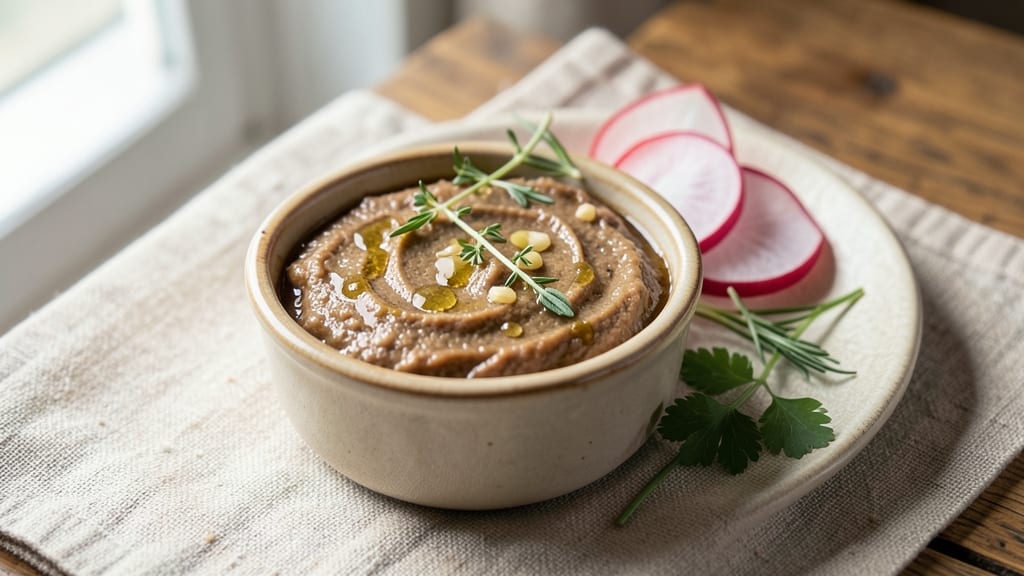
Creating an authentic chicken liver pâté delivers a luxurious texture and depth of flavor that elevates any gathering. The process begins with carefully rendering the liver fat to create a velvety base, then blending the cooked livers with aromatic herbs and spices.
This recipe balances traditional French techniques with modern convenience, ensuring professional results without requiring specialized equipment.
What sets this pâté apart is the silky consistency achieved through precise cooking and blending methods. The liver fat renders slowly to maintain its rich, golden hue, while the herbs—thyme, parsley, and tarragon—infuse subtle yet complex notes.
A light baking step ensures the pâté holds its shape when chilled, making it perfect for spreading or sculpting.
By following these steps, you'll achieve a pâté with a velvety mouthfeel and a harmonious blend of earthy liver flavor and bright herbal accents. Serve it with crusty bread, crackers, or as an elegant garnish for roasted vegetables.
The result is a dish that feels indulgent yet approachable, ideal for both special occasions and weeknight dinners.
Storage is simple: refrigerate in an airtight container for up to 5 days or freeze for longer preservation. Whether you're hosting dinner guests or treating yourself, this pâté delivers restaurant-quality richness at home with minimal effort.
Ingredients for chicken liver pate
Sixteen ingredients transform into a luxurious pâté with velvety texture and herbal sophistication.
| Ingredient | Amount | Notes |
|---|---|---|
| Chicken Livers 🍗 | 1 ½ lb | Fresh, trimmed of connective tissue |
| Unsalted Butter 🧈 | ¾ cup | Cold, cut into small cubes |
| Shallots 🧅 | 3 whole | Finely minced, approximately 0.25 cup |
| Fresh Thyme Leaves 🌿 | ½ oz | Stems removed, finely chopped |
| Fresh Parsley Leaves 🌿 | ½ oz | Stems removed, finely chopped |
| Fresh Tarragon Leaves 🌿 | ¼ oz | Finely chopped, stems removed |
| Diamond Crystal Kosher Salt 🧂 | ½ tsp | For seasoning during cooking |
| Freshly Ground Black Pepper 🌶️ | ¼ tsp | Lightly cracked |
| Extra-Virgin Olive Oil 🫒 | 1 tbsp | For final finishing |
| Heavy Cream 🥛 | ¼ cup | Cold, for blending |
| Fresh Lemon Juice 🍋 | 1 tbsp | From one small lemon |
| All-Purpose Flour 🌾 | 1 tbsp | For binding, if needed |
The quality of chicken livers is paramount—opt for fresh, bright red livers from a trusted butcher or specialty market like Whole Foods or D'Artagnan. Trim away any connective tissue or discolored spots immediately upon purchase. Costco often carries high-quality livers in bulk, ideal for pâté production. For optimal flavor, select livers with visible fat marbling, as this renders beautifully into the velvety base. Store livers in an airtight container in the coldest part of your refrigerator until use, no longer than 2 days before preparation.
Substitutions should be approached with caution to preserve the pâté's delicate balance. Duck livers can replace chicken livers at a 1:1 ratio, but they require slightly longer cooking. Fresh herbs can be swapped: chives or chervil may replace tarragon, though the flavor profile will shift subtly. For those without fresh thyme, dried thyme at one-third the amount works, but fresh is preferred for its bright aroma. The butter can be substituted with cold duck fat for a richer, more traditional French pâté. If heavy cream is unavailable, crème fraîche or sour cream provides a similar tang, though texture may vary slightly.
This pâté achieves its signature silky texture through precise rendering of liver fat and butter. Render the fat slowly over low heat to maintain its golden hue and prevent burning. Once chilled, the pâté keeps beautifully in an airtight glass container in the refrigerator for up to 5 days, maintaining its velvety consistency. For longer storage, portion into silicone molds or small ramekins, then freeze for up to 3 months. Thaw overnight in the refrigerator before serving to preserve texture. Serve at room temperature for optimal mouthfeel, accompanied by crusty baguette slices or water crackers for an elegant presentation.
Why You'll Love This Recipe
- No-Waste Magic: I swear by this recipe because it turns something often overlooked—chicken livers—into something luxurious with almost no effort. Just sear, blend, and mix with butter, shallots, and herbs. That’s it. No fancy gadgets, no stress.
- Rich Without Trying: The butter and shallots melt into the livers, creating a texture that’s velvety yet packed with flavor. Honestly, the thyme and parsley brighten it just enough to keep it from feeling heavy—like a hug from a French chef.
- Party or Pantry: Spread it on crusty bread for a crowd, or slather it on toast for a lazy weekend breakfast. I’ve even used it as a dip for veggies at book club—no one guessed it was budget-friendly. Works for holidays or weeknight cravings.
- Budget Luxury: A pound of chicken livers costs less than steak, yet this pate feels like a gourmet treat. Between us, it’s my secret for stretching meals without sacrificing taste. And leftovers? They last days in the fridge, tasting better with time.
Step-by-step instructions for chicken liver pâté
Transform rich chicken livers into velvety pâté with precise technique and aromatic herbs.
Prepare and Sear the Chicken Livers
Trim any visible connective tissue from the 1.5 lb chicken livers and pat them completely dry with paper towels. This step is crucial—moisture will prevent proper searing and create a watery pâté. Cut the livers into ¼-inch thick slices for even cooking.
Heat 1 tablespoon extra-virgin olive oil in a large skillet over medium-high heat until shimmering. Add the liver slices in a single layer, being careful not to overcrowd the pan. Sear for 2-3 minutes per side until they develop a deep golden-brown crust and reach an internal temperature of 145°F. Remove immediately and set aside on a plate.
If the livers release easily from the pan, they're ready. If they stick, wait another 30 seconds—they'll release when properly cooked. Overcooking at this stage will make the pâté dry and grainy.
Sauté the Shallots and Herbs
In the same skillet (no need to clean it—the fond adds flavor), reduce heat to medium and add 0.75 cup unsalted butter, cut into small cubes. Allow the butter to melt completely, then add the 3 whole shallots, finely minced. Cook for 5-6 minutes until the shallots soften and turn translucent.
Add the 0.5 oz fresh thyme leaves, 0.5 oz fresh parsley leaves, and 0.25 oz fresh tarragon leaves, all finely chopped. Stir for 1 minute until the herbs release their aromatic oils and the mixture becomes fragrant. Season with 0.5 tsp diamond crystal kosher salt and 0.25 tsp freshly ground black pepper. Remove from heat and let cool slightly.
Here's where the herbal depth develops—don't rush this step. The butter should coat the back of a spoon, indicating proper emulsification for the pâté's texture.
Process the Ingredients for Silky Texture
Transfer the seared chicken livers and shallot-herb mixture to a food processor fitted with the metal blade. Pulse 3-4 times to roughly chop, then stop and scrape down the sides. Add 0.25 cup cold heavy cream and process until completely smooth, scraping down the sides as needed. This cold cream helps stabilize the emulsion.
With the processor running, slowly drizzle in 1 tablespoon fresh lemon juice through the feed tube. The acidity brightens the flavors and prevents the pâté from becoming too rich. Process for an additional 1-2 minutes until perfectly smooth and velvety, with no visible texture.
Taste and adjust seasoning—you may need a pinch more salt or pepper. If the mixture is too thick, add 1 tablespoon all-purpose flour mixed with 1 teaspoon cold water to help bind. The final consistency should be thick but still pipeable.
Finish and Chill for Optimal Texture
Transfer the pâté to a heatproof bowl and place it over a pot of barely simmering water (bain-marie) for 10-15 minutes. This gentle heat ensures all ingredients meld together without curdling. Stir occasionally with a silicone spatula to maintain even temperature.
Remove from the bain-marie and let cool to room temperature, then refrigerate for at least 4 hours or overnight. Chilling firms the texture and allows flavors to fully develop. The pâté should achieve a glossy sheen and firm enough to hold its shape when piped.
For serving, bring to room temperature before piping onto toasted baguette slices or spreading on crackers. The contrast of warm pâté on cool bread creates the perfect texture experience.
Pro Tips For Making Chicken Liver Pate
- BLEACH THE LIVERS: Skip the soaking—just rub them with a pinch of salt and let sit 10 minutes while you prep shallots. This cuts the iron taste without extra steps. (Yes, even if you’re impatient like me, wait the full time.)
- SEAR IN BATCHES: Crowd the pan and they’ll steam instead of brown. Use two minutes per side on high heat, then pull them out when the edges are deep golden—not pink. Overcooking turns them rubbery, and no one wants that.
- FINE MINCE THE SHALLOTS: A knife chop leaves chunks that turn to mush. Pulse them in a food processor until they’re almost paste-like. This ensures they cook down smoothly and don’t turn to watery sludge when blended.
- STRAIN THE BUTTER: Melt the butter, then strain it through a fine-mesh sieve to remove any milk solids. Cold butter in the pate later just makes it grainy—smooth butter equals silky texture. (I learned this the hard way after three lumpy batches.)
Best sauces and condiments for this dish
Classic Mustard Sauce
This rich pâté pairs beautifully with a Dijon mustard sauce that cuts through its richness. Whisk together 2 tablespoons high-quality Dijon mustard (like Maille) with ¼ cup crème fraîche, 1 tablespoon fresh lemon juice, and a pinch of fleur de sel.
Thin with 2 tablespoons warm chicken stock until silky. Serve as a dip or drizzle over the pâté for a tangy contrast. 🌟
Herbed Crème Fraîche
For a lighter pairing, blend ½ cup crème fraîche with 1 tablespoon chopped fresh chives, 1 teaspoon chopped fresh dill, and a squeeze of lemon.
This bright, creamy sauce balances the pâté’s earthy depth while adding freshness. I like to pipe it alongside the pâté on a platter for an elegant presentation.
Red Wine Reduction
A bold red wine reduction elevates the pâté to gourmet status. Simmer 1 cup dry red wine (like Cabernet Sauvignon) with 1 shallot and 1 sprig thyme until reduced by half.
Finish with 1 teaspoon balsamic glaze and a pinch of salt. Drizzle over the pâté just before serving for a sophisticated touch.
Spicy Harissa Swirl
For heat lovers, mix 1 tablespoon harissa paste (like Levantine) with 2 tablespoons olive oil and a splash of water to thin. Swirl this vibrant red sauce alongside the pâté for a smoky, spicy kick. The harissa’s depth complements the liver’s richness while adding a North African flair. 🌶️
Sweet Onion Jam
Caramelize 1 large yellow onion in 2 tablespoons butter over low heat for 30 minutes until deep golden. Add 1 tablespoon honey and 1 teaspoon apple cider vinegar, then reduce until jam-like. Spoon this sweet-savory jam alongside the pâté for a perfect balance of flavors.
Creamy Truffle Oil Drizzle
For a luxurious finish, drizzle the pâté with 1 teaspoon high-quality truffle oil (like Briar’s) just before serving. The earthy, umami notes of the truffle oil enhance the pâté’s richness without overpowering it. A few drops of truffle oil elevate even the simplest presentation to restaurant-worthy elegance. ✨
Nutrition facts
Frequently asked questions
Why do I need to trim the connective tissue from chicken livers?
Connective tissue in chicken livers can turn rubbery and unpleasant when cooked. Trimming it ensures a smooth, velvety texture in your pâté. Use sharp scissors to snip away any visible strings or membranes before searing.
Can I substitute duck livers for chicken livers in this recipe?
Yes, but adjust cooking time slightly. Duck livers require 30-60 seconds longer per side to reach 145°F internal temperature. Their richer fat content also means you may need 10% less butter in the recipe to balance the richness.
What if my pâté turns out too runny after chilling?
This usually happens if the livers weren't cooked enough or too much liquid was added. Fix it by placing the pâté in a cold water bath for 10 minutes to firm up, then blend with 1 teaspoon cornstarch mixed with 1 tablespoon cold water until thickened.
How can I make this pâté ahead of time for a party?
Prepare the pâté up to 3 days in advance and store it in an airtight container in the fridge. For parties, portion into small ramekins and freeze for up to 3 months. Thaw overnight in the fridge before serving to maintain perfect texture.
What's the best way to serve this pâté at room temperature?
Spread it on toasted baguette slices, arrange on crackers, or pipe onto endive leaves for elegant appetizers. For a restaurant-style presentation, create a platter with the pâté surrounded by cornichons, pickled onions, and fresh herbs.