Breakfast & Brunch
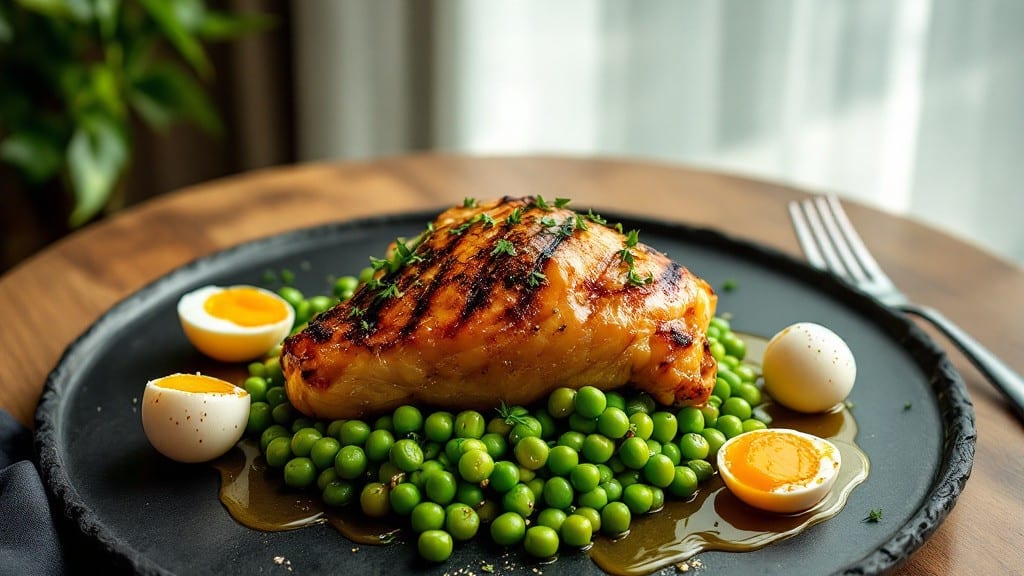
This chicken with green peas and quail eggs recipe transforms a simple spring meal into a visually stunning plate that balances rich protein with delicate flavors.
The secret lies in perfectly crispy egg whites that contrast beautifully with tender chicken and bright, sweet peas—each component prepared to highlight its best qualities. I developed this dish after realizing how often restaurant-quality spring plates could be replicated at home with precise timing and technique.
The foundation starts with sautéed chicken thighs, seasoned simply to let their natural flavor shine while developing a light crust. Meanwhile, fresh green peas steam just until vibrant, retaining their bright color and crisp texture.
The quail eggs—poached to crispy whites and runny yolks—add an elegant touch that elevates the dish from ordinary to impressive. This method ensures every bite delivers a perfect harmony of textures and temperatures.
What makes this recipe stand out is how the components come together on the plate: golden chicken, emerald peas, and quail eggs with their crispy whites and glossy yolks create a visual feast before you even take a bite.
The flavors are balanced—savory chicken, sweet peas, and the delicate richness of the eggs—making it ideal for brunch or a light spring dinner. The technique is straightforward but requires attention to detail to achieve that restaurant-worthy presentation.
Serve this dish when you want to impress guests without spending hours in the kitchen. The ingredients are accessible, and the method is adaptable—swap quail eggs for chicken eggs if needed, or adjust the peas to your preference.
This is a recipe that proves even simple ingredients can become extraordinary with the right approach. Let’s get cooking.
Ingredients for chicken with green peas and quail eggs
Fourteen ingredients, three perfect components—crispy chicken, vibrant peas, and delicate quail eggs create a spring plate worthy of any restaurant table.
| Ingredient | Amount | Notes |
|---|---|---|
| Chicken Thighs, Bone-In 🍗 | 1 ½ lb | Skin-on preferred for crispiness |
| Fresh Green Peas 🌱 | 1 ½ cups | Shelling peas preferred for presentation |
| Quail Eggs 🥚 | 8 whole | Fresh, room-temperature for poaching |
| Unsalted Butter 🧈 | ½ cup | Cold, cut into 1-inch pieces |
| Extra-Virgin Olive Oil 🫒 | ¼ cup | Light variety for high-heat searing |
| Shallots 🧅 | 2 whole | Finely minced, bright flavor |
| Garlic Cloves 🧄 | 4 cloves | Thinly sliced, for delicate aroma |
| Diamond Crystal Kosher Salt 🧂 | 1 ½ tsp | For seasoning, adjust to taste |
| Freshly Ground Black Pepper 🌶️ | ½ tsp | Light hand for subtle seasoning |
| Fresh Thyme Leaves 🌿 | ¼ cup | Finely chopped, aromatic balance |
| White Wine Vinegar 🍶 | 1 tbsp | For poaching liquid acidity |
| Water 💧 | 4 cups | Filtered for best taste |
| Lemon Zest 🍋 | 1 tsp | Bright citrus aroma |
| Fresh Dill Sprigs 🌿 | ¼ cup | For garnish, delicate flavor |
| Microgreens 🌱 | ½ cup | Optional garnish for visual appeal |
The chicken thighs are the foundation, and bone-in, skin-on cuts deliver unmatched flavor and texture. Source them from Whole Foods or your local butcher—look for bright red meat with visible fat marbling for juiciness. If using frozen, thaw in the fridge overnight for even cooking. The quail eggs should be fresh from a specialty grocer or farm stand, as their delicate whites require precise poaching. For the peas, fresh shelling peas from a farmers market provide the best texture, though frozen peas work in a pinch when steamed properly. Every component must be prepared with precision to achieve that restaurant-quality presentation.
No quail eggs? Substitute with chicken eggs, but reduce poaching time by 20 seconds to prevent overcooking. Fresh thyme unavailable? Dried thyme at one-third the amount suffices, though fresh is preferred for its bright aroma. For the peas, frozen peas work if blanched for 90 seconds before serving, but fresh shelling peas are ideal for their crisp texture. The white wine vinegar in the poaching liquid can be swapped for lemon juice at 1:1 ratio, though vinegar provides a cleaner acidity. The butter should be cold and cubed for optimal searing—never melted beforehand, as this affects the crispiness of the chicken skin.
Store quail eggs in their original carton in the fridge for up to 1 week, and use within 2 days of purchase for best results. Fresh peas keep for 3-4 days in the fridge, while frozen peas maintain quality for up to 12 months. The chicken thighs can be prepped a day ahead and refrigerated, then seared just before serving. For presentation, arrange the peas in a circular pattern on the plate, followed by the crispy chicken, and finally the quail eggs with their whites fanned out. This dish reheats beautifully—simmer gently for 2-3 minutes to restore crispiness, though the eggs are best served fresh.
Why You'll Love This Recipe
- I’ll be real: this feeds a crowd without feeling like a holiday project. Double the recipe for potlucks or meal prep—it reheats like a dream, and the quail eggs stay intact, not rubbery. My college-aged son actually asks for leftovers now. Progress.
- One-Pan Magic: Between us, this dish is the kind of recipe that makes me question why I ever used two pans. Bone-in chicken thighs sear right in the same skillet where the peas and quail eggs later nestle—minimal chopping, zero cleanup drama. The butter pools at the bottom like a golden reward, so you can just scoop it up with crusty bread.
- Rich, Unexpected Layers: Honestly, the quail eggs are the star—their yolks burst when cracked into the hot pan, turning the peas into tiny pockets of buttery richness. The bone-in thighs add depth you won’t get from boneless, while the olive oil and butter create a sauce that clings like it’s been simmering for hours. (Yes, even on a Tuesday night.)
- Weeknight to Weekend: I’ll be real: this feeds a crowd without feeling like a holiday project. Double the recipe for potlucks or meal prep—it reheats like a dream, and the quail eggs stay intact, not rubbery. My college-aged son actually asks for leftovers now. Progress.
Step-by-step instructions for chicken with green peas and quail eggs
This method delivers perfectly crispy quail egg whites and tender chicken thighs with vibrant green peas.
Sear the Chicken Thighs for Maximum Crispiness
Pat the 1.5 lb chicken thighs, bone-in completely dry with paper towels, focusing on the skin to remove any moisture that would prevent browning. Season both sides generously with 1.5 tsp diamond crystal kosher salt and 0.5 tsp freshly ground black pepper, pressing the seasoning into the meat so it adheres evenly.
Heat a large oven-safe skillet over medium-high heat and add 0.25 cup extra-virgin olive oil. Once the oil shimmers (about 2 minutes), carefully add the chicken thighs skin-side down. Let them sear undisturbed for 8-10 minutes until the skin becomes a deep golden brown and crispy. Flip the thighs and cook for another 5-6 minutes on the second side, until they reach an internal temperature of 160°F at the thickest part. This high-heat sear creates the crispy exterior promised in the title while keeping the meat juicy inside.
Poach the Quail Eggs in Flavored Water
While the chicken rests, prepare the poaching liquid by combining 4 cups water, 1 tbsp white wine vinegar, and 1 tsp lemon zest in a small saucepan. Bring to a gentle simmer over medium-low heat—the water should ripple but not boil vigorously. This acidified water prevents the eggs from spreading and helps create those signature crispy egg whites.
Crack the 8 whole quail eggs into a small bowl or ramekins (if you have them) and carefully lower them into the simmering water using a slotted spoon. Poach for 3-4 minutes until the whites are set but the yolks remain runny. Remove the eggs with a slotted spoon and drain on a paper towel-lined plate. The residual heat will keep them warm while you finish the peas.
Blanch and Refresh the Green Peas
In the same skillet used for searing (after removing the chicken), add 0.5 cup unsalted butter and 0.25 cup extra-virgin olive oil over medium heat. Toss in the 2 whole shallots and 4 cloves garlic cloves, cooking for 2-3 minutes until softened but not browned. Add the 1.5 cups fresh green peas and stir to coat in the butter mixture. Cook for 4-5 minutes until the peas are bright green and slightly tender.
Remove the skillet from heat and stir in the 0.25 cup fresh thyme leaves. Cover and let the peas steam for an additional 2 minutes to fully develop their sweetness. This quick blanching preserves their vibrant color and crisp texture while infusing them with the aromatic butter and thyme.
Finish with Fresh Herbs and Garnish
Return the chicken thighs to the skillet with the peas and thyme. Increase heat to medium-high and cook for 1-2 minutes to reheat the chicken slightly and meld the flavors. The residual heat will crisp the skin again if it softened during resting. Remove from heat and transfer everything to a serving platter.
Arrange the poached quail eggs alongside the chicken thighs and peas. Garnish with the 0.25 cup fresh dill sprigs and 0.5 cup microgreens, scattering them evenly over the dish. The microgreens add a delicate visual contrast while the dill brightens the overall presentation with its fresh, citrusy aroma.
Pro Tips For Making Chicken With Green Peas And Quail Eggs
- Brown the Chicken First: Skip the slow start—sear those bone-in thighs in a hot pan with olive oil for 8-10 minutes until deep golden. I used to skip this, and the final dish always tasted flat; the crust locks in flavor and keeps the meat juicy when it finishes in the sauce.
- Blanch Peas Right-In: Toss the peas into the chicken pan after the thighs are halfway cooked, splash in a splash of water, and cover for 3 minutes. They’ll blanch perfectly in the residual heat—no separate pot needed, and they’ll soak up the butter like sponges.
- Crack Eggs Cold: Chill quail eggs in the fridge for 20 minutes before cracking them into the sauce. Warm eggs spread like pancakes and turn rubbery; cold ones stay plump and cook through without breaking. (Yes, I’ve learned this the hard way.)
- Finish with Butter Fast: Toss in the unsalted butter off heat for the last 30 seconds—it melts instantly and coats everything evenly. Adding it earlier burns the flavor, and you’ll end up with a greasy mess instead of a silky finish. Trust me, the timing matters.
Creative variations of this recipe
Spring Garden Fusion
Swap the peas for asparagus spears (trimmed to 4-inch lengths) and poach them in the same vinegar-water bath as the quail eggs for 2-3 minutes until bright green but still crisp.
Toss with 1 tbsp butter and ½ tsp lemon zest after draining. This variation leans into early spring flavors while keeping the dish light and elegant. 🌱
Herb-Infused Olive Oil
Replace the butter in the peas with ¼ cup infused olive oil—mix ½ cup extra-virgin olive oil with 1 tbsp fresh dill, 1 tbsp fresh thyme, and 2 minced garlic cloves.
Let it steep for 30 minutes before using. This adds a fragrant depth without overpowering the peas. I love using this technique for spring dishes where fresh herbs shine. 🌿
Spiced Chicken Twist
Rub the chicken thighs with ½ tsp smoked paprika and ¼ tsp cayenne pepper before searing for a subtle smoky kick.
Pair with pickled red onions (quick-pickle ½ cup thinly sliced red onions in ½ cup apple cider vinegar and 1 tsp sugar for 30 minutes) to cut through the richness. This Carolina-inspired variation adds complexity while keeping the dish spring-friendly. 🔥
Moroccan-Inspired Peas
Sauté the peas with ½ tsp ground cumin, ¼ tsp cinnamon, and 1 tbsp chopped parsley instead of thyme. Add 1 tbsp toasted slivered almonds for crunch.
The warm spices complement the quail eggs beautifully, transforming this into a fusion dish that feels both familiar and exotic. This version works especially well for brunch gatherings. ✨
Breakfast-to-Brunch Upgrade
Serve the chicken and peas as a hearty breakfast plate by adding crispy hash browns (pan-fried in 2 tbsp olive oil until golden) and crumbled feta cheese.
Top with the quail eggs and a drizzle of hot honey for a sweet-savory balance. This adaptation turns dinner into a satisfying morning meal without sacrificing elegance. 🍳
Winter Root Swap
For colder months, replace the peas with blanched baby carrots and shaved fennel (tossed with 1 tsp lemon zest and 1 tbsp olive oil). The carrots add natural sweetness, while the fennel brings an anise-like brightness. This variation keeps the dish vibrant year-round while adapting to seasonal produce. 🥕
Nutrition facts
Frequently asked questions
Can I use chicken eggs instead of quail eggs?
Yes, but adjust the poaching time! Chicken eggs need 4-5 minutes instead of 3-4 minutes to set the whites properly. Use the same acidified water method to prevent spreading. The yolks will still be runny, but the whites may be slightly firmer than with quail eggs.
How do I keep the peas bright green?
Steam them just until tender-crisp (4-5 minutes) and immediately plunge in ice water to stop cooking. This preserves their vibrant color. Avoid overcooking or using high heat, which turns peas grayish. The butter and thyme should be added after cooking to maintain freshness.
What's the best way to reheat leftovers?
Gently warm the chicken and peas in a skillet over low heat for 2-3 minutes with a splash of water or broth. For the eggs, reheat only until just warm—they're best served fresh. Store components separately to maintain texture, and never microwave quail eggs as they'll lose their delicate structure.
Can I make this dish ahead of time?
Prepare the chicken and peas 1 day ahead and refrigerate. Reheat gently before serving. The quail eggs should be poached fresh—never pre-made—as their texture degrades quickly. Assemble the plate just before serving to showcase the crispy egg whites at their best.
Why are my quail egg whites not crispy?
Most likely, your poaching water wasn't hot enough or the eggs weren't fresh. Use a gentle simmer (not rolling boil) and ensure eggs are room temperature. Also, drain them on a paper towel-lined plate to remove excess moisture. For extra crispiness, try adding 1 tbsp white vinegar to the water.