
Main Courses
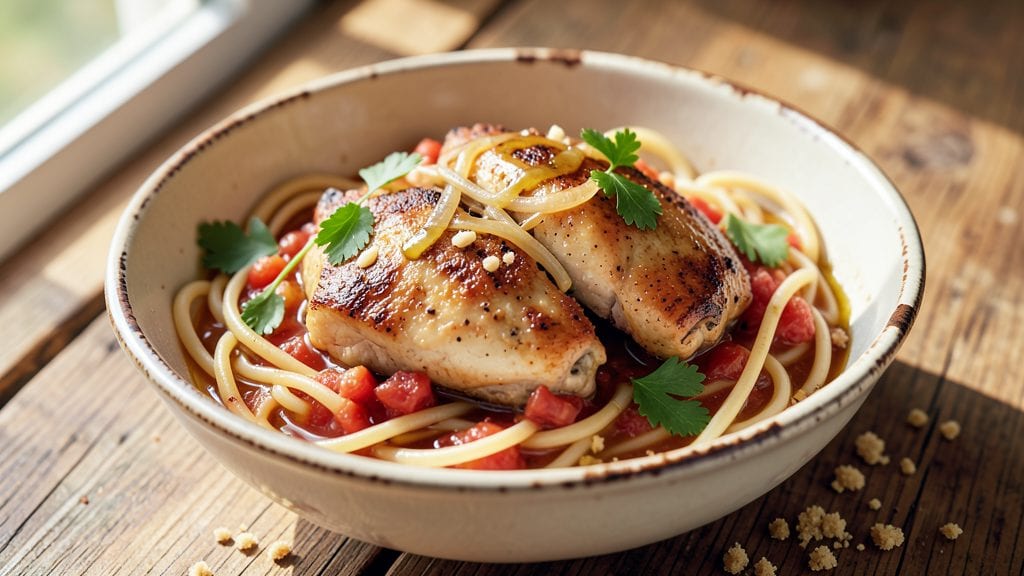
Grandma's chicken spaghetti recipe isn't just a meal—it's a warm embrace in a bowl, the kind that makes Sunday dinners feel like home. 💛 I learned this one-pan method from my grandmother in Georgia, where every ingredient had purpose and every bite carried love.
The secret lies in browning the chicken first, building deep flavor before it even touches the sauce.
This recipe delivers restaurant-quality results with simple techniques: pan-seared chicken, al dente spaghetti, and a rich tomato sauce that simmers until thick and velvety. No fancy equipment needed—just one pot, 45 minutes, and the kind of comfort food that disappears faster than you can say "seconds."
The chicken stays tender while the sauce develops layers of savory goodness.
By the time you serve it, you'll have golden-brown chicken pieces resting on perfectly cooked spaghetti, all blanketed in that perfect tomato sauce. The aroma alone will have everyone gathering at the table, and the first bite reminds you why homemade always tastes better.
Serve with crusty garlic bread and a simple salad for a complete meal.
This dish works as well for weeknight dinners as it does for family gatherings—just scale the ingredients as needed. The beauty of this recipe is its flexibility: add mushrooms for earthiness, fresh basil for brightness, or extra parmesan for richness. Let's bring Grandma's kitchen to your table.
Ingredients for grandma's chicken spaghetti
Simple pantry staples and fresh flavors transform into Grandma's legendary one-pan chicken spaghetti.
| Ingredient | Amount | Notes |
|---|---|---|
| Boneless, Skinless Chicken Thighs 🍗 | 1 ½ lb | Cut into 1-inch pieces |
| Spaghetti 🍝 | 12 oz | Break in half before cooking |
| Yellow Onion 🧅 | 1 whole | Diced, medium size |
| Garlic Cloves 🧄 | 4 cloves | Minced, fresh preferred |
| Canned Crushed Tomatoes 🍅 | 2 cups | San Marzano if available |
| Chicken Broth 💧 | 1 cup | Low-sodium preferred |
| Dried Oregano 🌿 | 1 tbsp | Italian variety if possible |
| Dried Basil 🌿 | 1 tsp | Or 1 tbsp fresh chopped |
| Extra-Virgin Olive Oil 🫒 | 2 tbsp | For browning chicken |
| Salt 🧂 | 1 ½ tsp | Kosher or sea salt |
| Black Pepper 🌶️ | ½ tsp | Freshly ground preferred |
| Parmesan Cheese 🧀 | ½ cup | Freshly grated from block |
| Red Pepper Flakes 🌶️ | ¼ tsp | Optional for heat |
The chicken thighs are everything here—bone-in, skin-on if you can find them, but boneless works fine. Trader Joe's or Costco usually have good prices on family packs. Look for pieces with some marbling—they stay juicier. The spaghetti should be medium thickness (about 12 oz for 4 servings), not those skinny noodles. I always grab a few extra ounces because it disappears fast. For the tomatoes, San Marzano cans make a difference, but any good-quality crushed tomatoes work. The broth? Low-sodium is key—you'll be adding salt later, and you don't want to overdo it.
No San Marzano tomatoes? Any crushed tomatoes will work, but drain out the excess liquid first. Fresh basil instead of dried? Use twice the amount—it's brighter that way. The oregano can be swapped for Italian seasoning, but stick with Italian oregano if you can. Running low on chicken broth? Water plus 1 tsp chicken bouillon gets you close. The red pepper flakes are optional, but if you love heat, add them at the end. For extra richness, stir in 1 tbsp butter with the Parmesan at the finish. And if you're feeling fancy, toss in a handful of mushrooms when you brown the chicken—they soak up all that flavor.
This dish tastes even better the next day—leftovers keep for 4 days in the fridge, or 3 months frozen. I like to portion it into containers so I can grab a meal for work. The sauce thickens as it cools, so you might want to add a splash of broth if it seems too thick when reheating. Store the Parmesan in its original container with a slice of bread to keep it fresh. The garlic and onions can be prepped ahead and stored in the fridge for 3 days—just toss them in the freezer if you're not using them soon.
Why You'll Love This Recipe
- No-Fuss Pantry Staples: I swear by this recipe because it uses what I always have: canned tomatoes, onions, and garlic. No fancy ingredients, no last-minute grocery runs—just open, chop, and simmer.
- Tomato-Garlic Magic: That crushed tomato base with garlic cloves? It’s where the flavor lives—deep, tangy, and rich without needing fancy herbs. The chicken thighs stay juicy while soaking up every bit.
- Lunchbox Leftovers: Make a big batch on Sunday, and you’ve got dinner covered for days. Cold spaghetti? Still delicious in sandwiches or salads—my kids actually eat their leftovers this way.
- Budget-Friendly Feast: Chicken thighs and spaghetti stretch my grocery budget, and canned tomatoes keep costs low. Honestly, it’s the kind of meal that makes me feel like I’m feeding a crowd without breaking the bank.
Step-by-step instructions for Grandma's chicken spaghetti
This one-pan wonder brings homestyle comfort to your table with minimal cleanup.
🍳 Step 1: Brown the Chicken and Sauté the Aromatics
Heat the 2 tablespoons extra-virgin olive oil in a large, deep skillet over medium-high heat until shimmering. Add the 1.5 lb boneless, skinless chicken thighs cut into 1-inch pieces, seasoning immediately with 1 teaspoon salt and ¼ teaspoon black pepper. Let them sear undisturbed for 3-4 minutes until golden brown on one side.
Flip the chicken pieces and continue cooking for another 3-4 minutes until they're golden on all sides. Remove the chicken from the skillet and set it aside. In the same skillet (no need to wipe it clean—those browned bits are flavor gold), add the 1 whole yellow onion diced and the 4 cloves garlic cloves minced. Sauté for 3-4 minutes until the onions soften and the garlic becomes fragrant—this is where the magic starts building.
🍳 Step 2: Build the Flavor-Packed Sauce
Pour in the 2 cups canned crushed tomatoes and the 1 cup chicken broth. Stir well to scrape up any browned bits from the bottom of the skillet. Add the 1 tablespoon dried oregano, 1 teaspoon dried basil, and 0.25 teaspoon red pepper flakes. Bring the mixture to a gentle simmer, then reduce heat to medium-low and let it cook uncovered for 8-10 minutes until the sauce thickens slightly.
The sauce should be rich and fragrant, with the flavors melding together. Here's the thing—this is where patience pays off. If the sauce looks too thick, add 2-3 tablespoons water to loosen it. The goal is a sauce that coats the back of a spoon but still has body. Keep the chicken nearby—you'll be adding it back in soon.
🥘 Step 3: Cook the Spaghetti Directly in the Sauce
Break the 12 oz spaghetti in half before cooking—this helps it cook more evenly in the skillet. Add the spaghetti to the simmering sauce and stir gently to coat the noodles. Pour in just enough water to cover the spaghetti by about 1 inch—you should have about 4-5 cups total liquid in the skillet. Bring to a boil, then reduce heat to medium-low.
Cook the spaghetti for 10-12 minutes, stirring occasionally, until al dente. You'll know it's ready when you can taste a slight resistance in the center of a strand. The pasta should be tender but still have a bit of bite. Here's a pro tip: if the water level gets too low, add ½ cup hot chicken broth to keep it cooking properly.
🥘 Step 4: Combine and Finish with Cheese
Return the browned chicken to the skillet and stir gently to combine everything. Cook for another 3-4 minutes to heat the chicken through and allow all the flavors to meld together. Taste and adjust the seasoning if needed—you might want to add a pinch more salt or black pepper depending on your preference.
Remove the skillet from heat and stir in the ½ cup freshly grated parmesan cheese. Let it sit for 1 minute to melt into the sauce, creating a creamy, cheesy finish. The cheese should be fully incorporated but still have a slight texture—this is what makes it taste homemade. Give everything one final stir before serving.
Pro Tips For Making Grandma'S Chicken Spaghetti
- Brown the Chicken First: Skip the direct-to-tomato sauce route—sear the chicken thighs in a dry pan over medium-high heat until golden, about 5-6 minutes per side. I learned this the hard way: skipping the browning leaves you with bland, rubbery chicken that just soaks up the sauce instead of standing up to it.
- Dice Onions Like Dice: Cut the yellow onion into even ¼-inch pieces, not thin slices or big chunks. Thin slices burn before softening, and big chunks stay stubbornly raw. My grandmother swore by this, and she was right: uniform size means faster cooking and no surprises.
- Salt the Pasta Water Hard: Boil the spaghetti in water with at least 2 tablespoons of salt per gallon—more if you’re using a smaller pot. Unsalted pasta water tastes like nothing, and you’ll end up seasoning the whole dish later. Trust me, it’s the thing that matters most for flavor.
- Simmer Tomatoes Low and Slow: After adding the crushed tomatoes, reduce the heat to a gentle simmer (not a rolling boil) and let it cook uncovered for at least 15 minutes. This thickens the sauce naturally and deepens the flavor—rushing it leaves you with a watery, one-dimensional mess.
Storing and reheating your leftovers
Fridge Storage Secrets
Let your chicken spaghetti cool completely before storing—about 30-45 minutes—to prevent condensation and soggy pasta. Transfer to an airtight container (I love Glasslock containers for their snug seals) and refrigerate for up to 4 days.
The sauce will actually deepen in flavor overnight, so leftovers taste even better the second day. 💛
Pro tip: Store the Parmesan separately in its original container with a slice of bread to keep it fresh. The garlic and onions can be prepped ahead and stored in the fridge for 3 days—just toss them in the freezer if you're not using them soon.
I always make extra because this dish reheats beautifully for quick lunches.
Freezer-Friendly Prep
For long-term storage, portion the spaghetti into freezer-safe containers or heavy-duty plastic bags, leaving 1 inch of headspace for expansion. Seal tightly and freeze for up to 3 months. The sauce may thicken slightly when frozen, so add 1-2 tablespoons of broth or water when reheating. 🧊
I recommend freezing in single-serving portions for easy grab-and-go meals. Label each container with the date—trust me, you'll forget what's in your freezer after a few months! When ready to eat, thaw overnight in the fridge for the best texture.
Stovetop Reheating
My preferred method is reheating on the stovetop because it preserves the texture of both the pasta and chicken. Transfer the spaghetti to a skillet and heat over medium-low heat, stirring occasionally.
Add 2-3 tablespoons of water or broth if the sauce seems too thick. Cook for 5-7 minutes until everything is heated through to 165°F internal temperature. 🔥
For extra richness, stir in 1 tablespoon of butter or a splash of heavy cream during reheating. Taste and adjust seasoning—you might need a pinch more salt since flavors concentrate during storage. The goal is to revive that homestyle aroma and warmth.
Microwave Shortcuts
When you're in a hurry, microwave reheating works in a pinch. Cover the spaghetti with a damp paper towel and microwave on high for 2 minutes, stir, then continue in 30-second intervals until heated through.
Add 1-2 tablespoons of water if it looks dry. The texture won't be as perfect as stovetop, but it's still delicious. ⏰
For even heating, I recommend using a microwave-safe glass bowl—it distributes heat more evenly than plastic. If you're reheating from frozen, add an extra 1-2 minutes and check the internal temperature of the chicken to ensure it reaches 165°F.
Never reheat past 165°F to avoid drying out the pasta.
Nutrition facts
Frequently asked questions
Can I use chicken breasts instead of thighs?
Chicken breasts will work, but they're leaner and can dry out more easily. If using breasts, cut them into ½-inch pieces and cook for only 2-3 minutes per side to avoid overcooking. For extra juiciness, add 1 tablespoon olive oil to the skillet when browning.
How do I make this dish vegetarian?
Swap the chicken for 1 lb mushrooms (cremini or portobello) or 1 block firm tofu cut into cubes. Sauté the mushrooms first with the onions and garlic, then proceed with the sauce and pasta as directed. Add 1 teaspoon soy sauce or 1 tbsp nutritional yeast for umami depth.
Why does my sauce taste bland?
Bland sauce usually means not enough browning or seasoning. Always sear the chicken until deeply golden—those browned bits are flavor bombs. Taste the sauce before adding salt; you might need ½ tsp more salt or 1 extra pinch of red pepper flakes. Simmer uncovered for 10-12 minutes to concentrate flavors.
Can I make this in a slow cooker?
Yes! Brown the chicken and sauté aromatics first, then transfer everything to a 6-quart slow cooker. Add ½ cup water to the skillet, scrape up the browned bits, and pour into the slow cooker. Cook on low for 4-5 hours or high for 2-3 hours. Stir in cooked spaghetti and Parmesan at the end.
What's the best way to serve this?
Pair with garlic bread (toast slices with butter and minced garlic), a simple side salad (mixed greens with balsamic), or steamed green beans. For extra flair, garnish with fresh basil leaves and cracked black pepper. Serve family-style straight from the pan for maximum coziness.